
She, Ruins, Everything
She, Ruins, Everything
a collaborative group exhibition
24-27 July 2025 // 24-27 Ιουλίου 2025
In the beginning, none of us knew what it would be. A show? A performance? A drama? A comedy? How much would we really all work together, we who have never met before? How many of us will there be? Nine, and then eleven, seven, and then four, or six, if you count all of us, really.
What we knew was this: we had three weeks (a bit less) to come together and interpret the theme: She, Ruins, Everything. Or: She ruins everything!
You see, there was tension there from the start. Was it a phrase, or three nouns? Would it be about collective experience- deeply collaborative, heavily universal- or would it be personal, intimate, a collective red thread re-wound?
And furthermore, how does Athens come into it all? How does Greece come into it?
Did I escape, I wonder?
My mind winds to you
Old barnacled umbilicus, Atlantic cable,
Keeping itself, it seems, in a state of miraculous
repair.

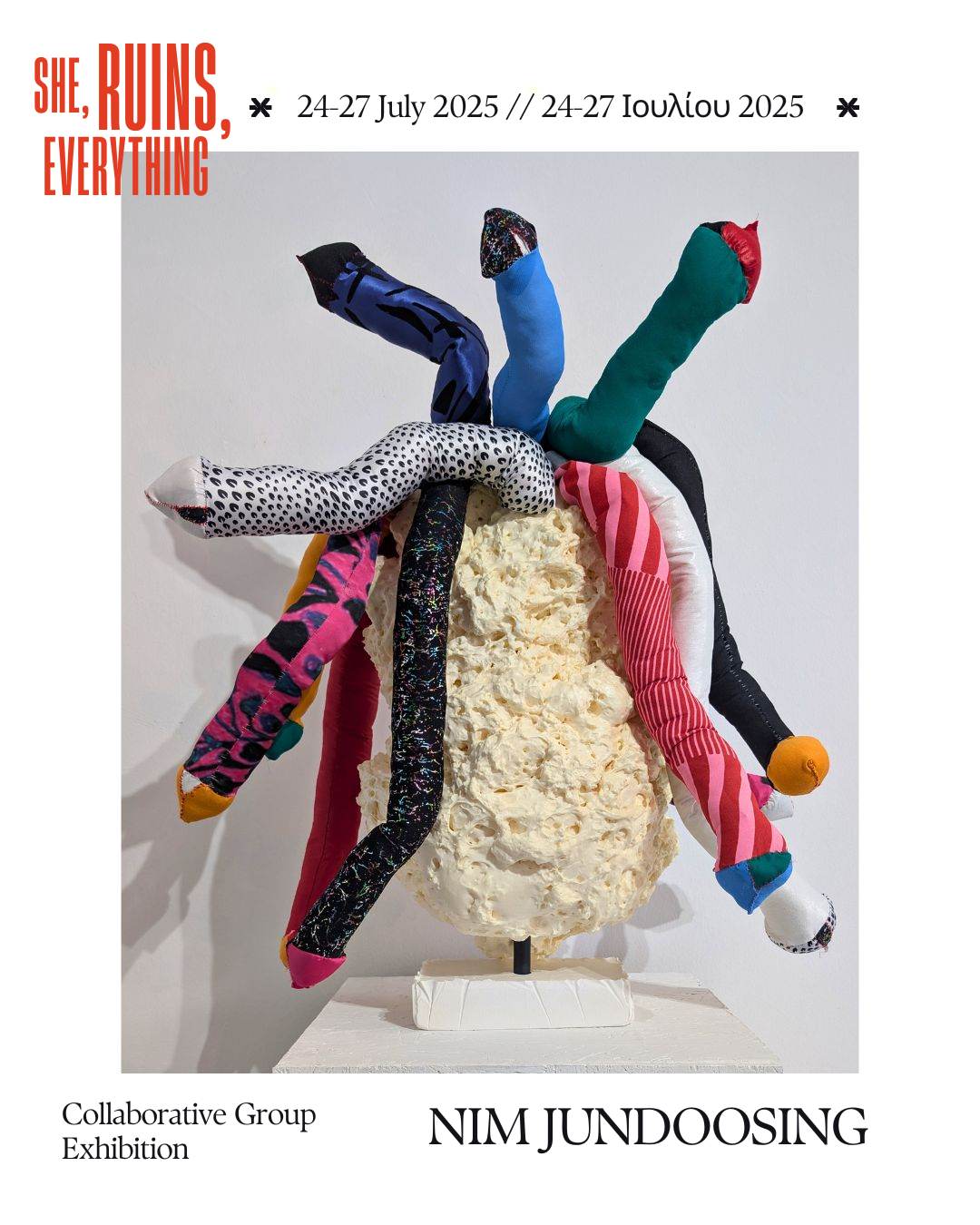
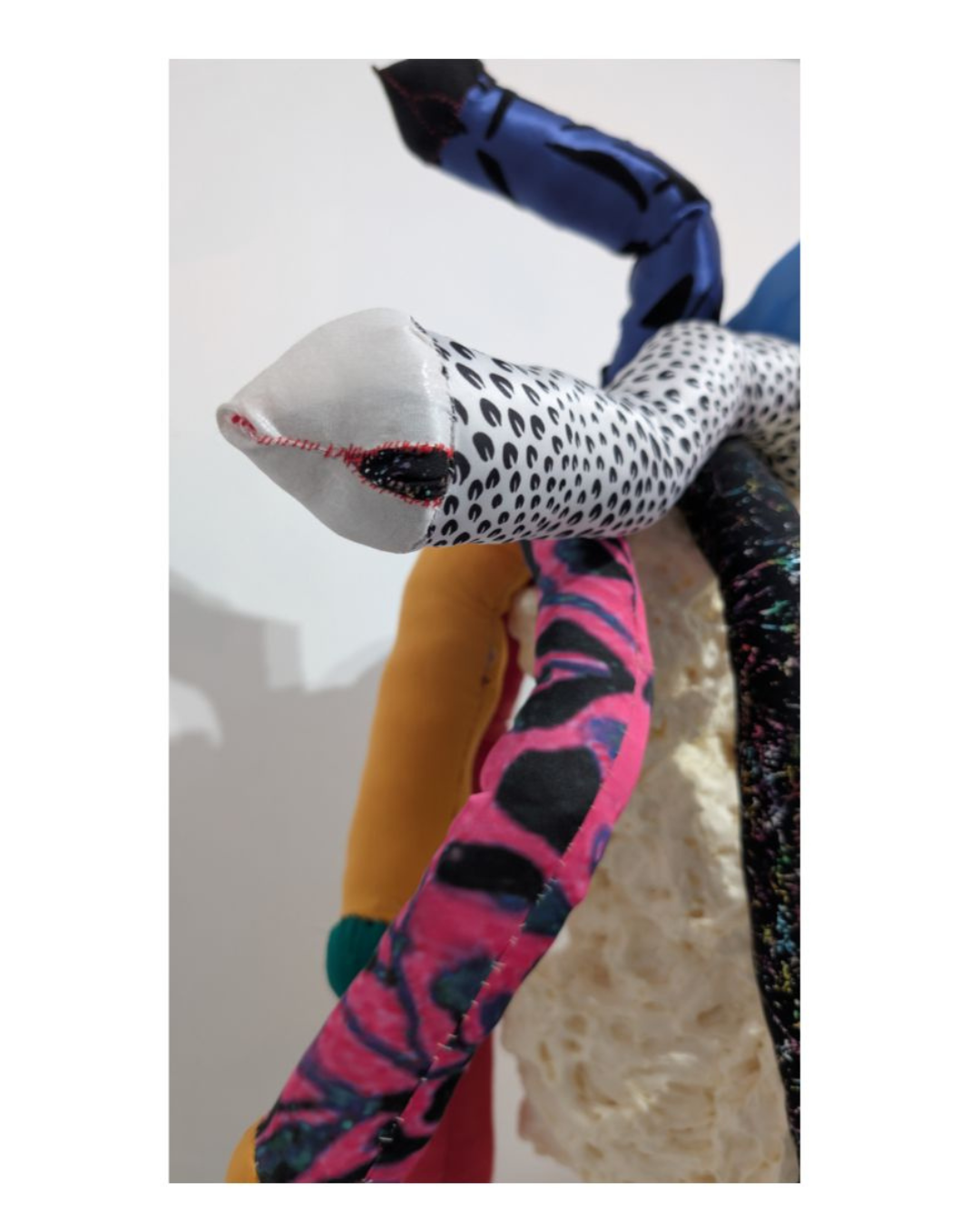
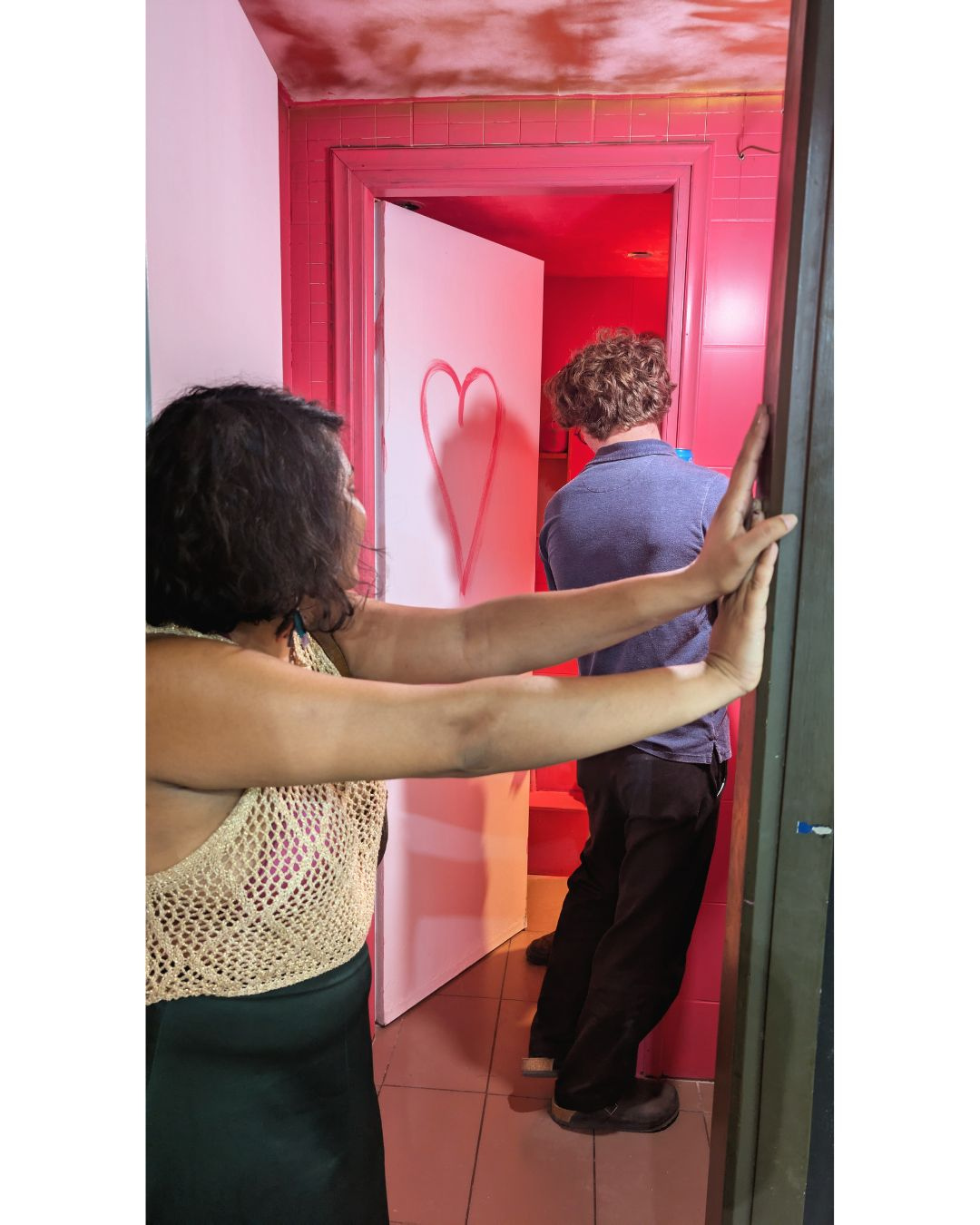
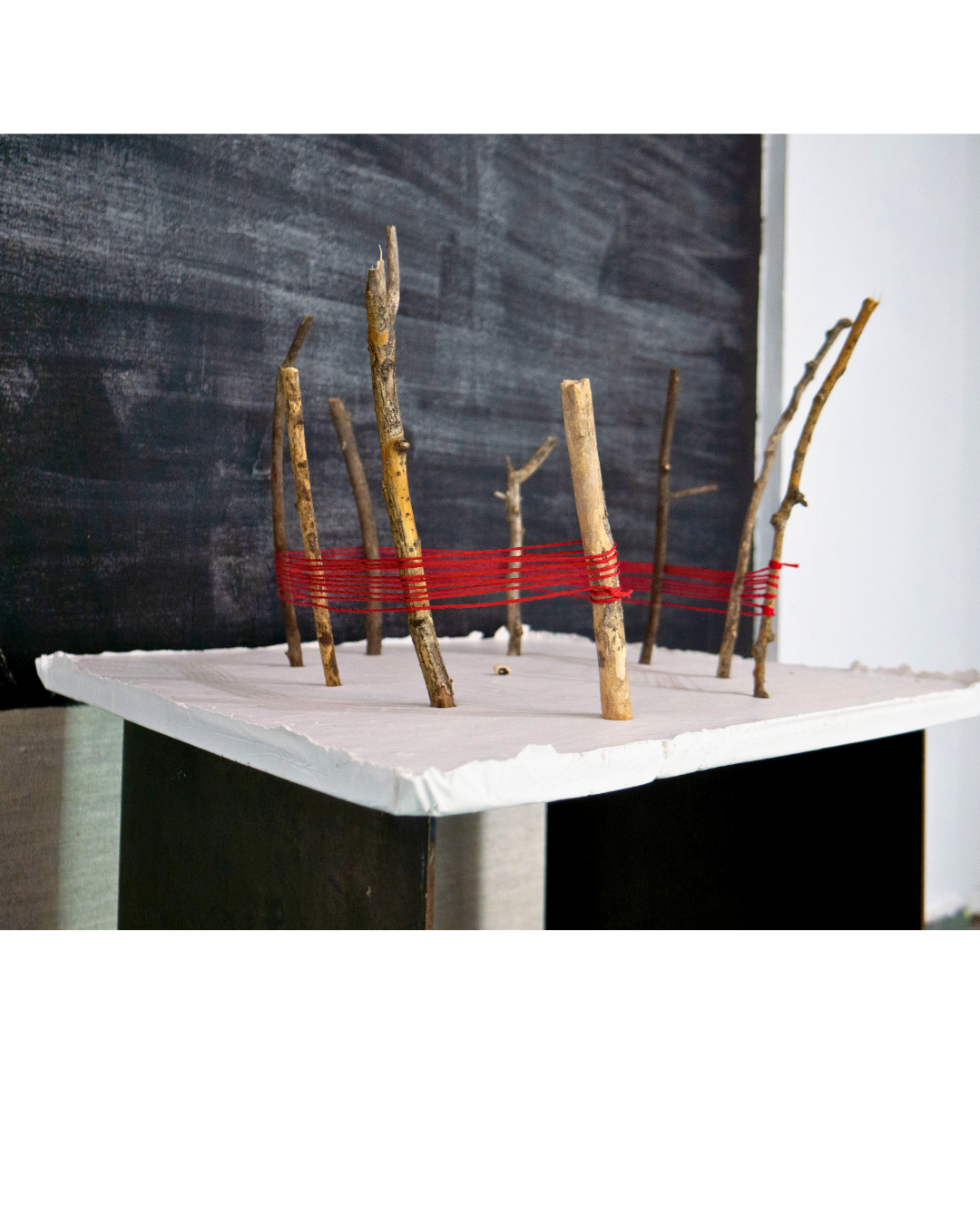
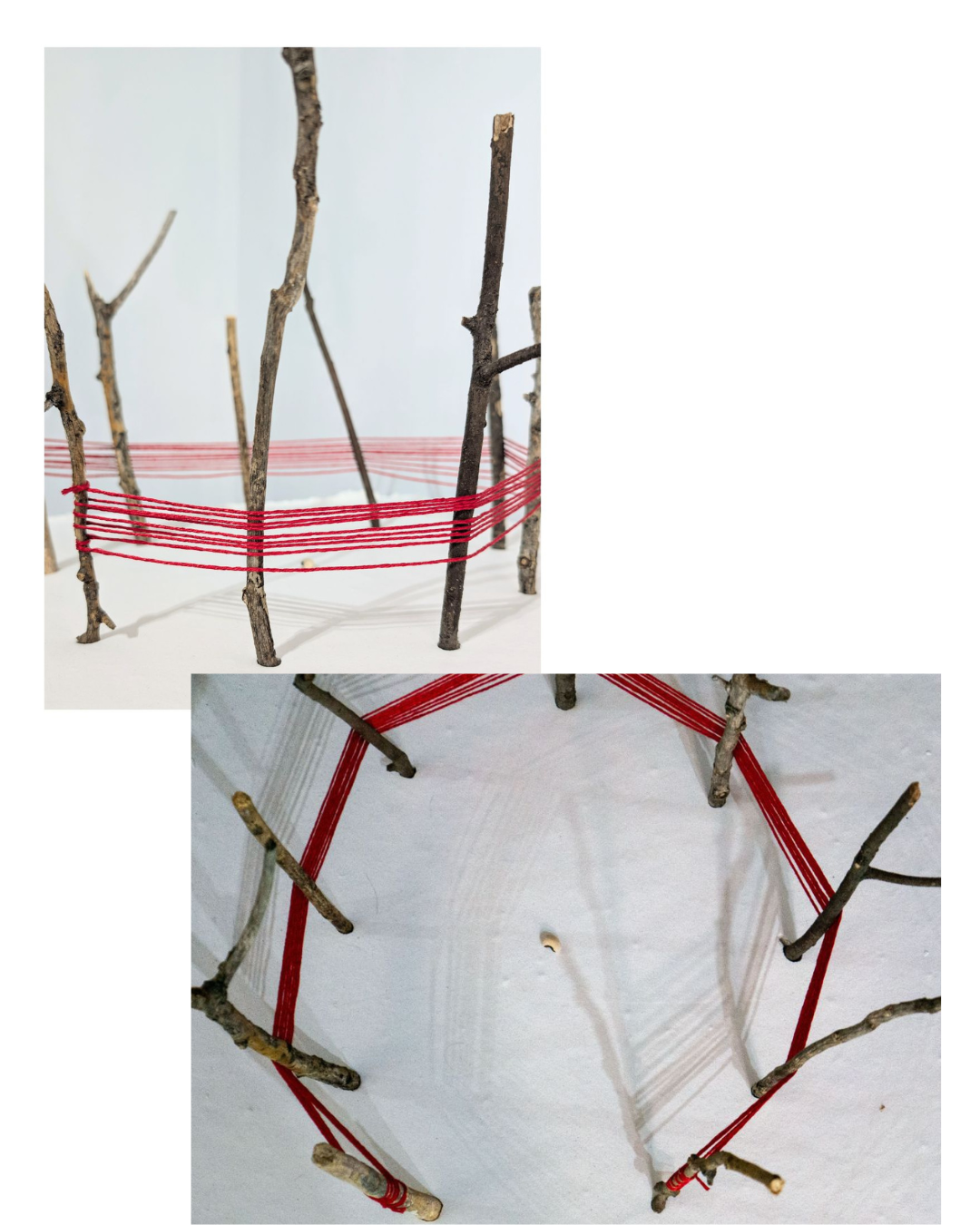
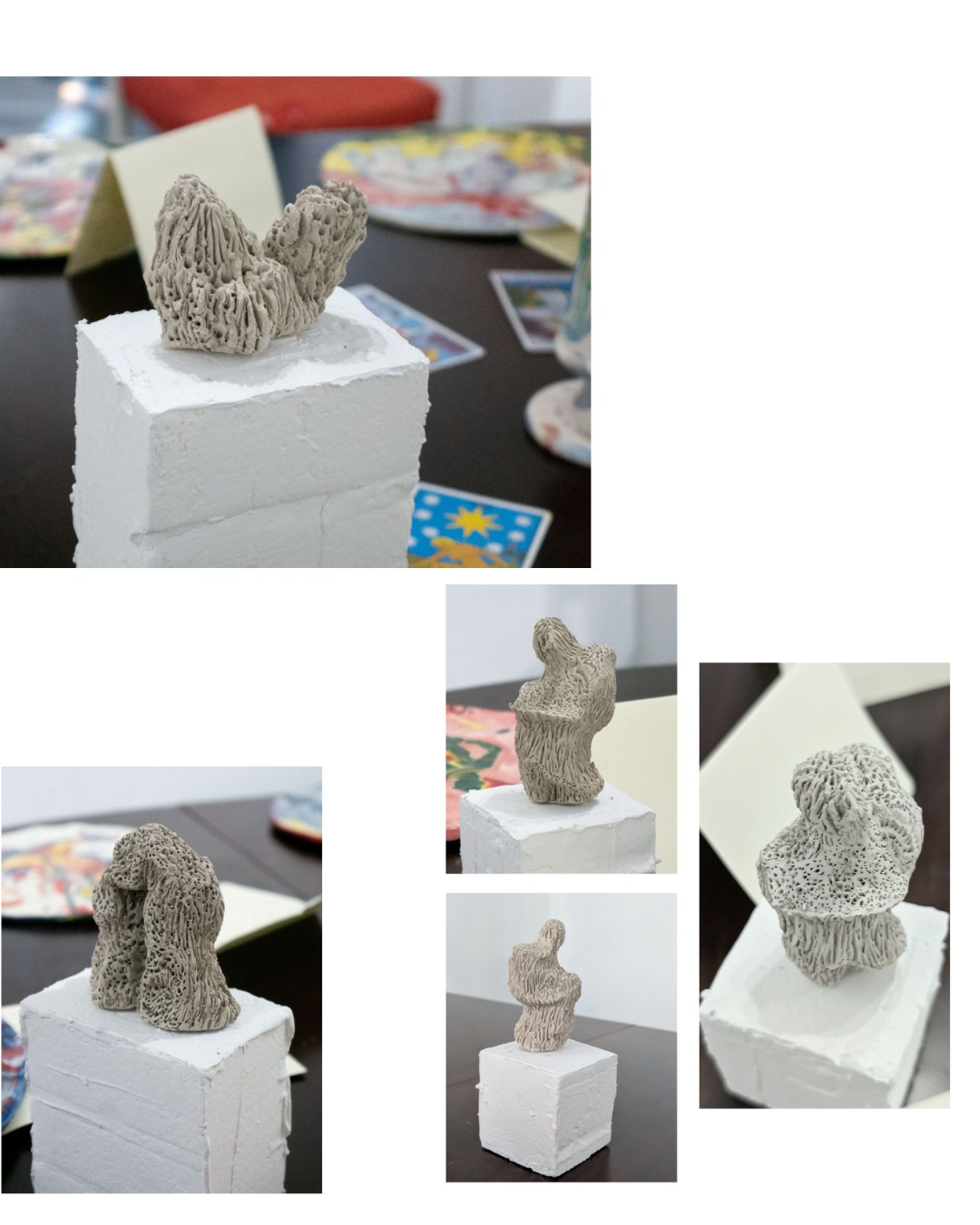
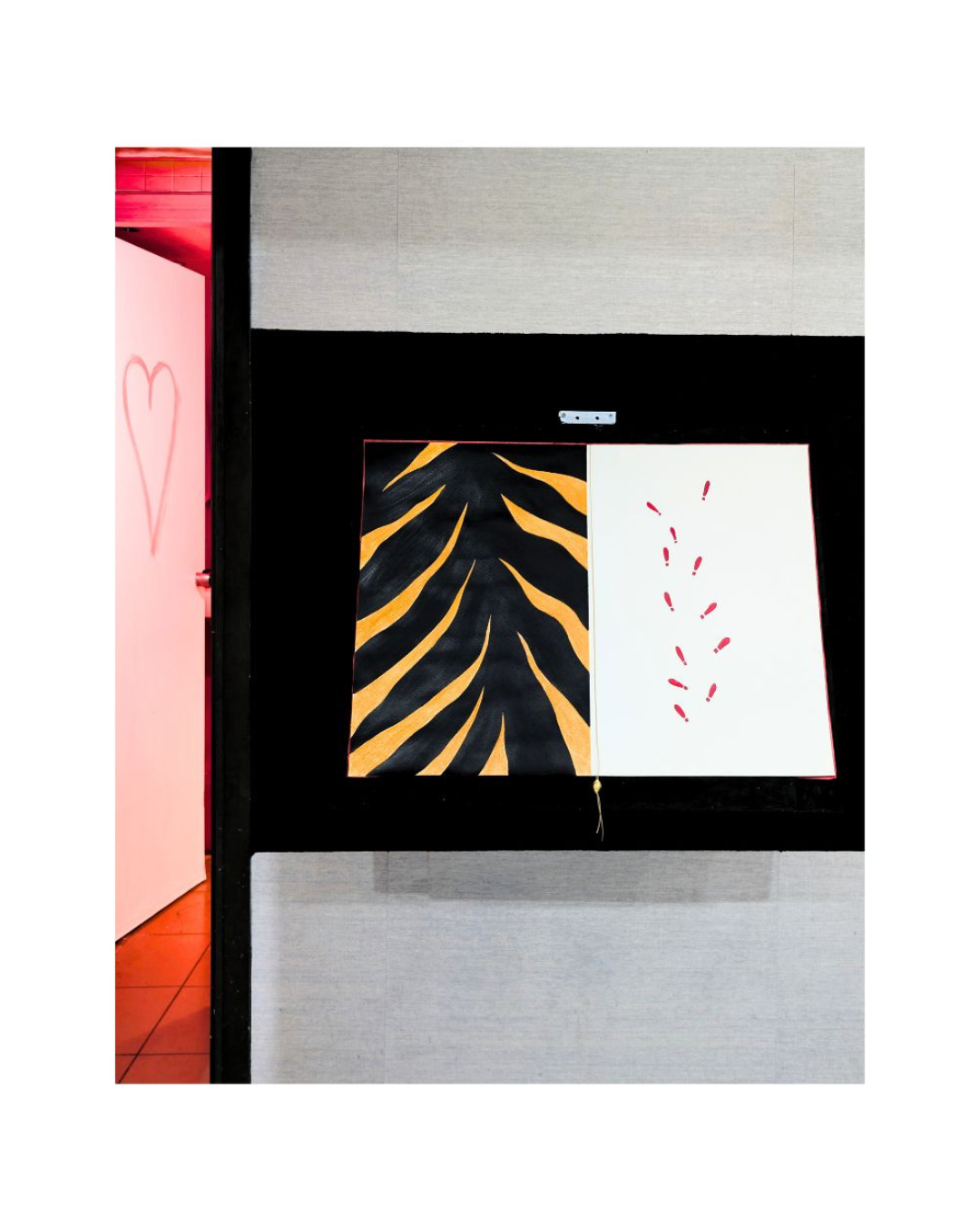
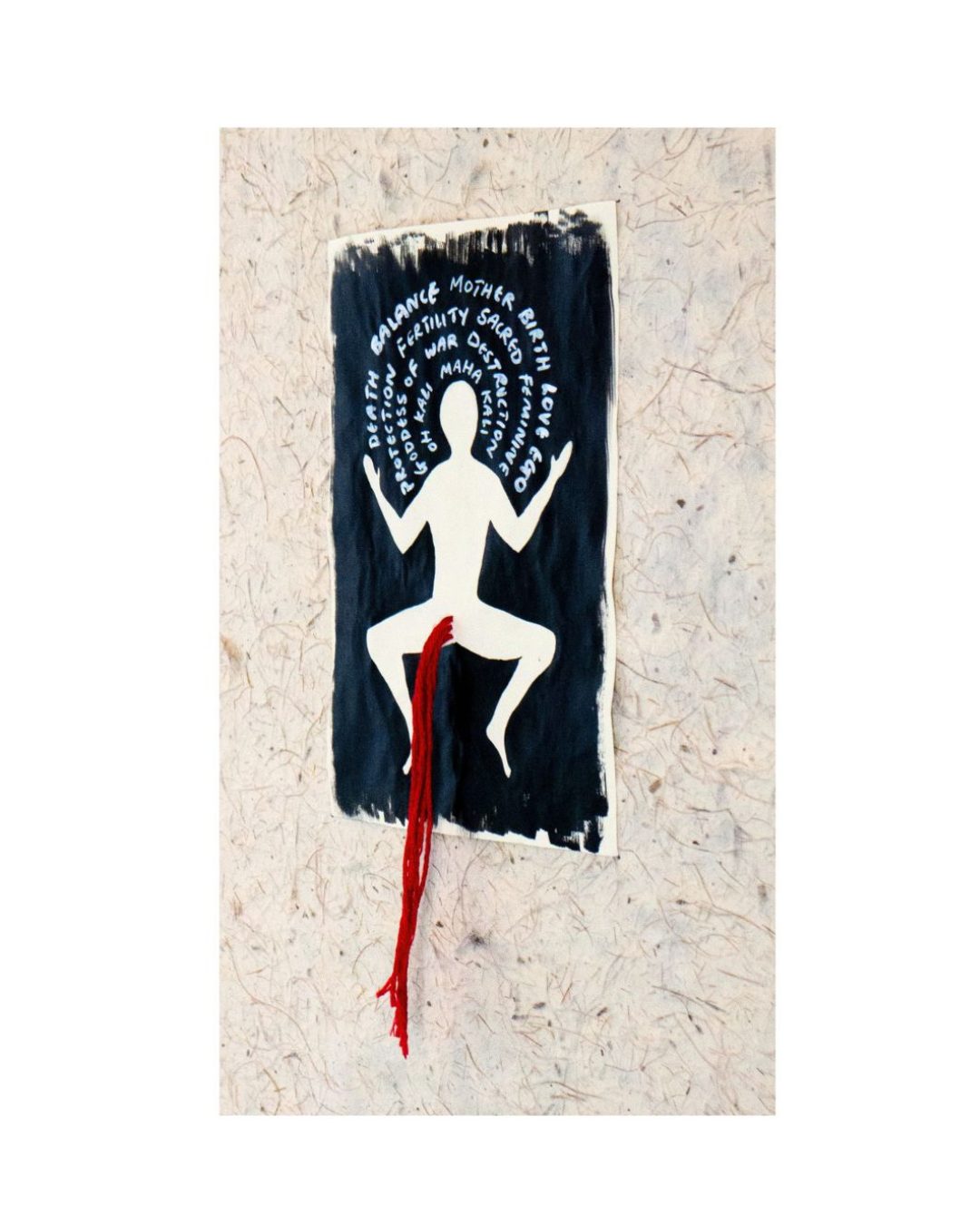
Slowly, with time, themes begin to emerge. We produce clay and pass it between us, squishing, sculpting, pinching, pressing, teasing out meaning and finding our voices. We speak of violence, against women, by women. Of murder, by poison, by gun, for the sake of revolution, for the sake of the children, for the sake of a word. We revisit villainesses and victims of old, and wonder, could they actually be heroines? Medea, Medusa, Athina, Polyxena, Iphigenia: is it funny or sad to echo their cries? How do we give shape to the feminine voice, the feminine gaze? Who really gets turned to stone, and, more, what are the snakes made of??
We share cookies, olives, beer, tea. We speak sickness and pain, latent rage and eye rolling injustices.
The more we speak, the more new questions emerge. That is our collective undertaking: to ask, to voice, as a form of digging deeper. To make, as a way to reveal.
So now, we wonder, what about “she”? What is “she”? What is “ruins”- the noun or the verb? What about “everything”?
You only have to look at the Medusa straight on to see her. And she’s not deadly. She’s beautiful and she’s laughing.
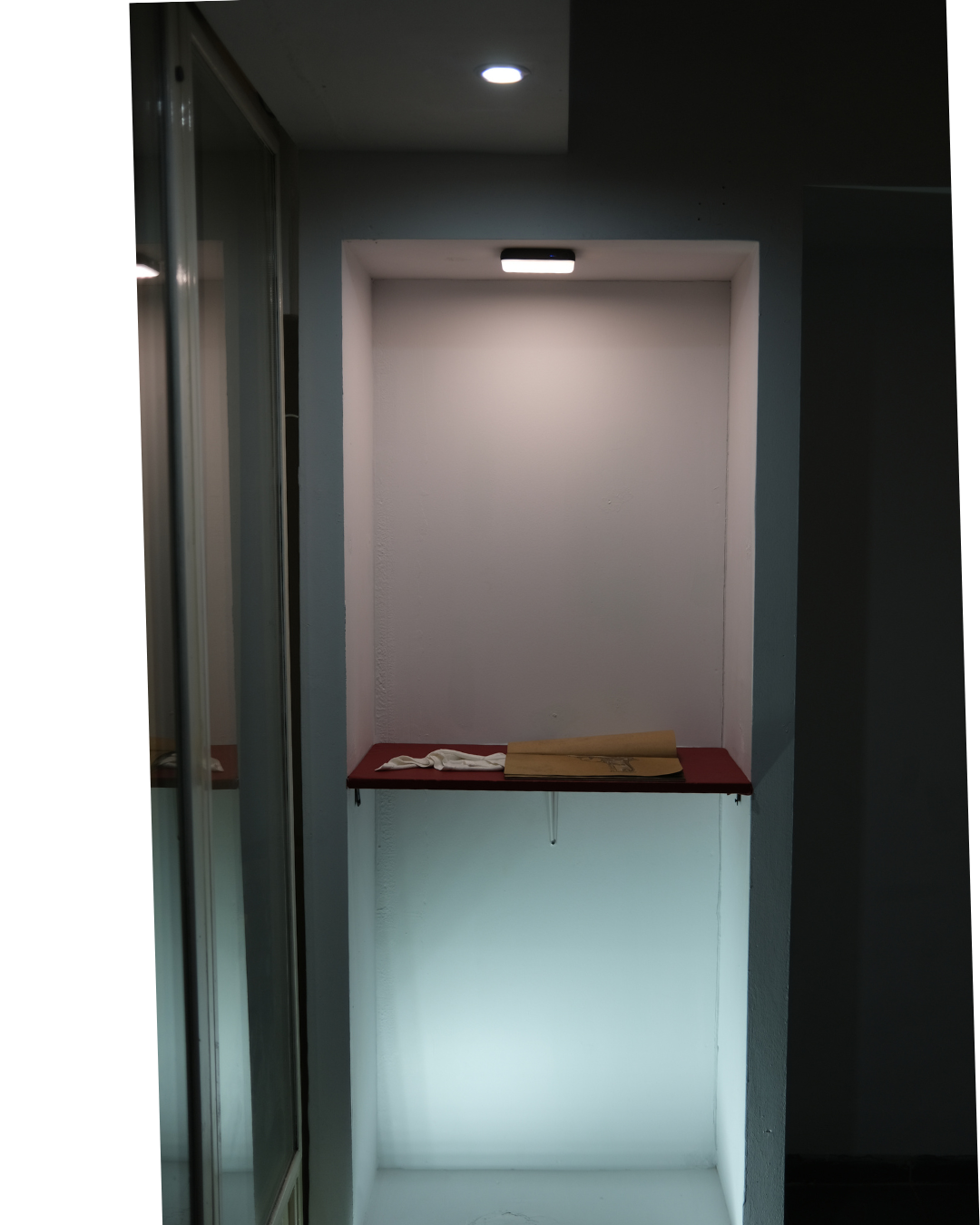
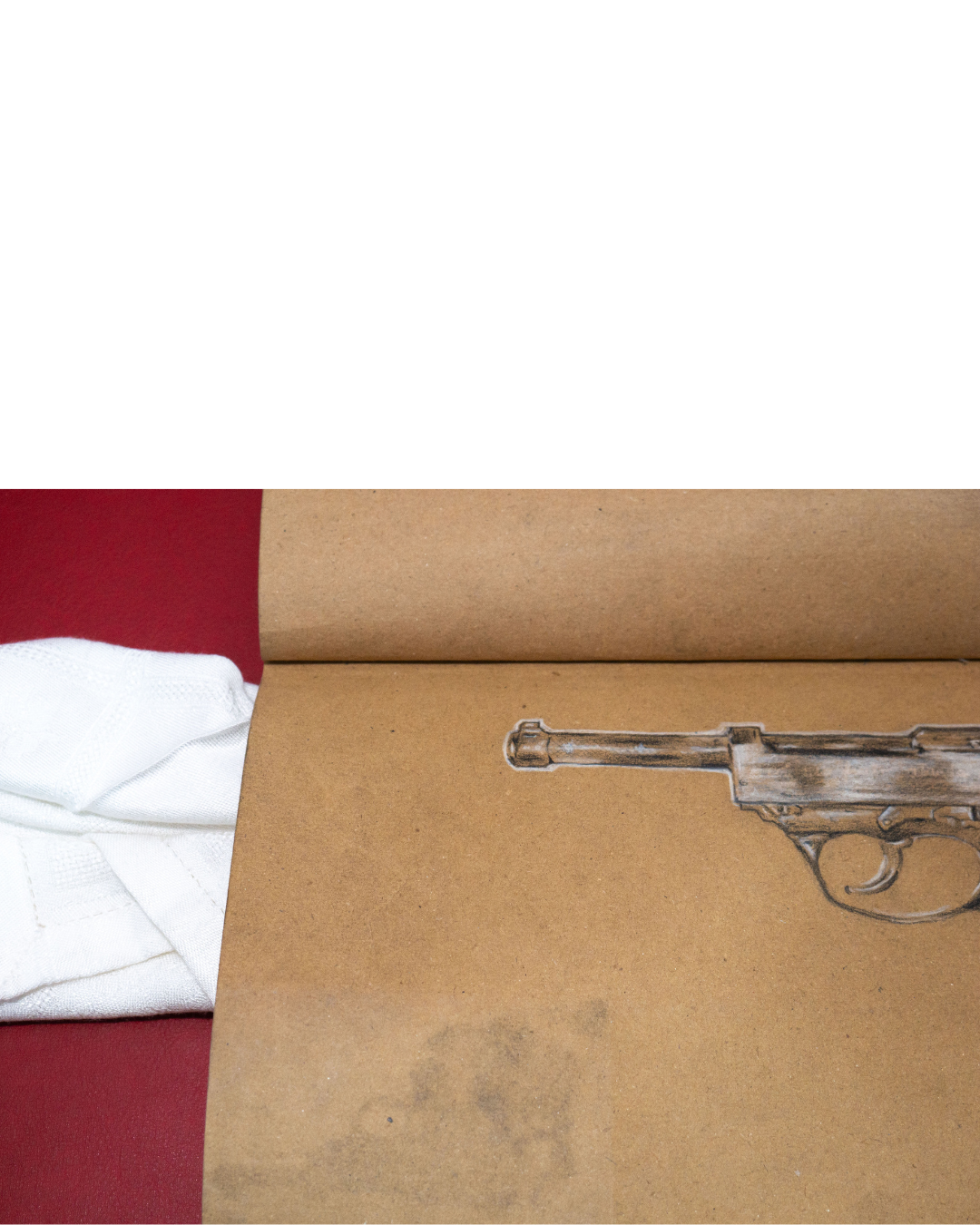
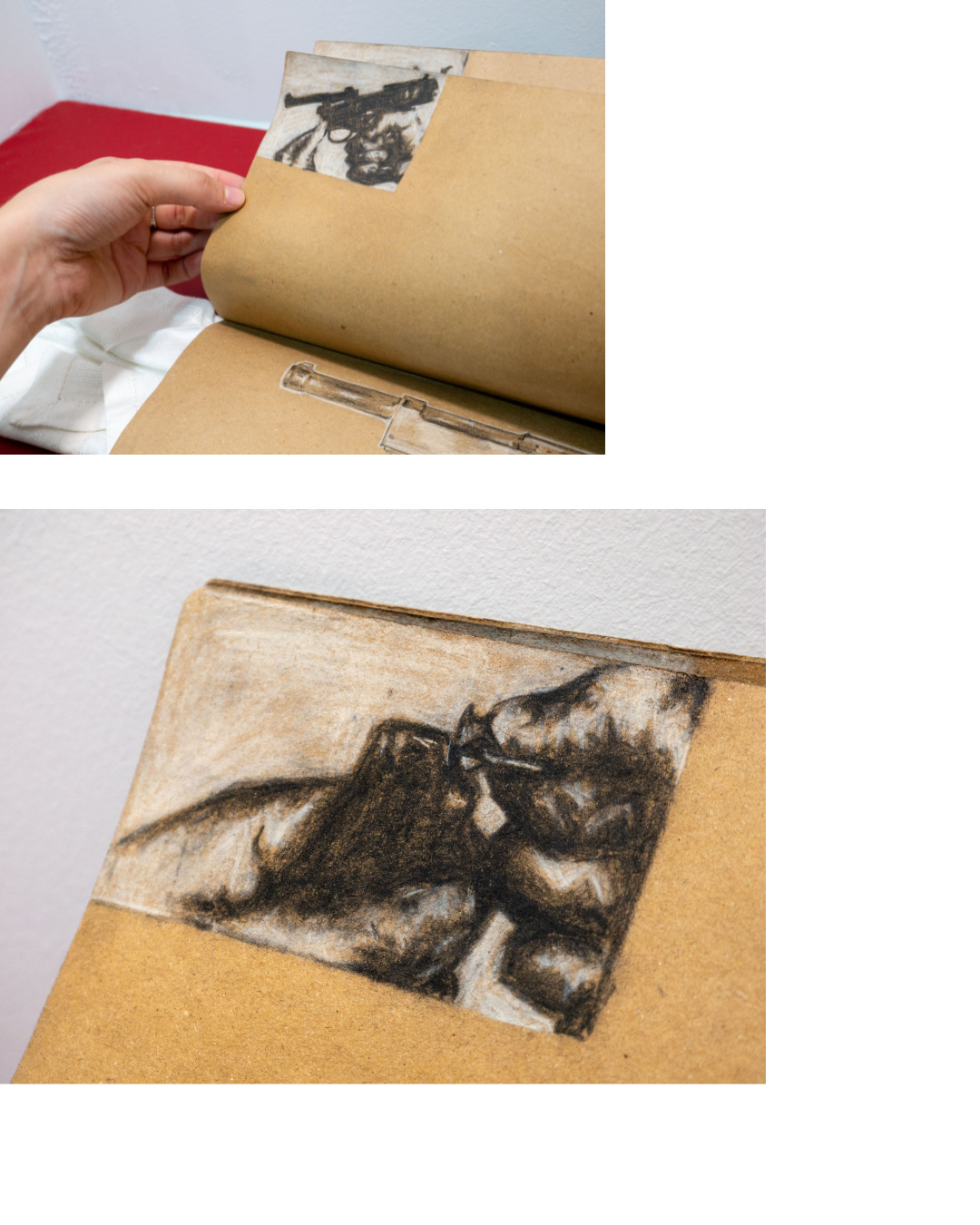
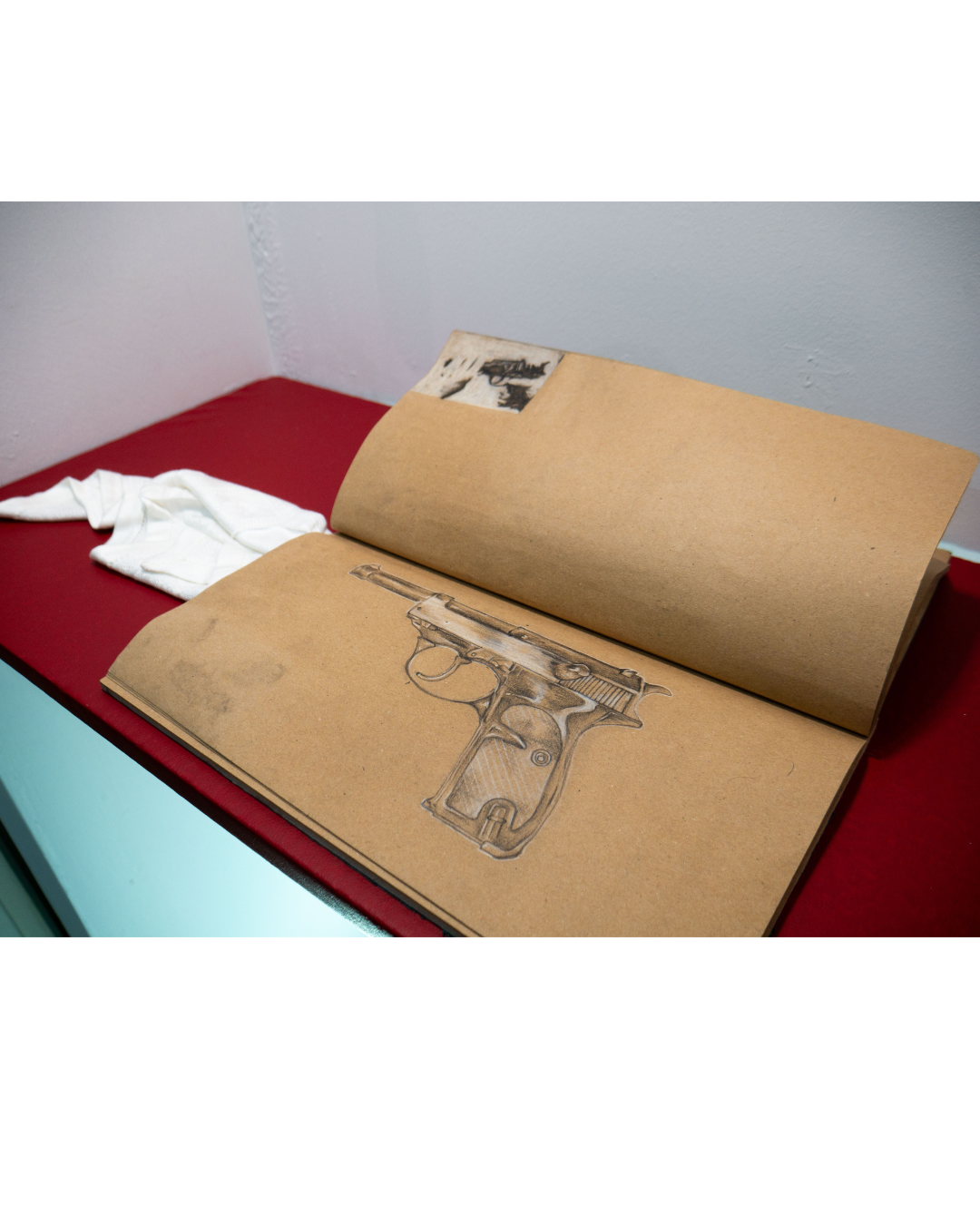
“She” is a gun reinterpreted by the hand in the work of Martina Andreoni. The P38, symbol of Italian left wing liberation, drawn over and over again. Real drawings of a real gun in a real book that serves as a false catalogue, calling up questions of violence and symbolism in art. If a real hand draws a real gun in a false catalogue, who is listening? If the same hand makes the gesture of the P38 during a political rally, where does the line between symbolic gesture and direct action end?
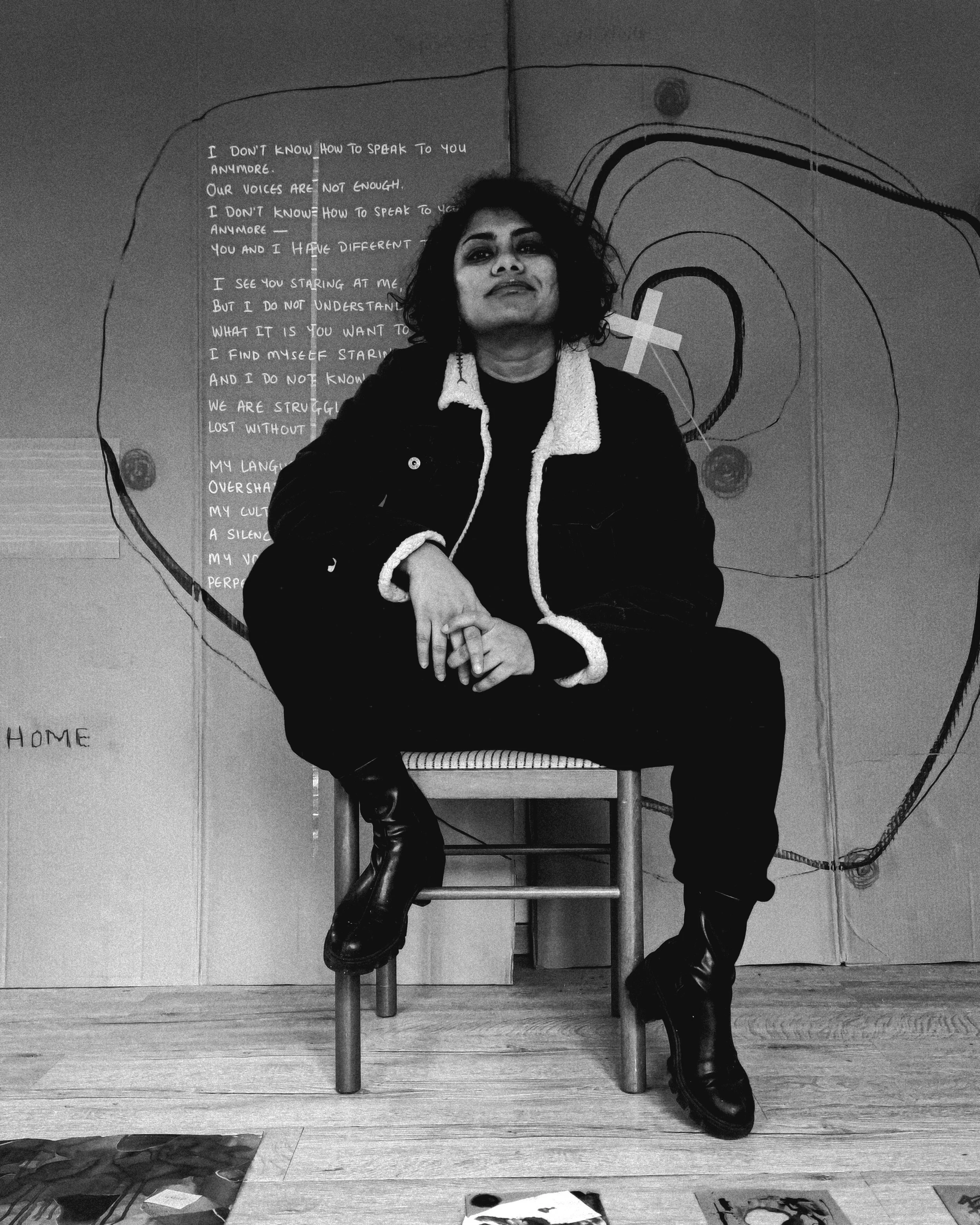
“She” is Medusa, staring at heroes, turning them into stone- “Ruins”. But what if roles are reversed? What if, as imagined and crafted by Nim Jundoosing, we see Medusa’s snakey hair slithering from Poseidon’s stoney head? What if those snakes are dicks? (Ridiculous!) What if Poseidon is a dickhead with glittering eyes, a fool who (like all the Greek gods?) violated the bodies of women and yet was celebrated in myth.
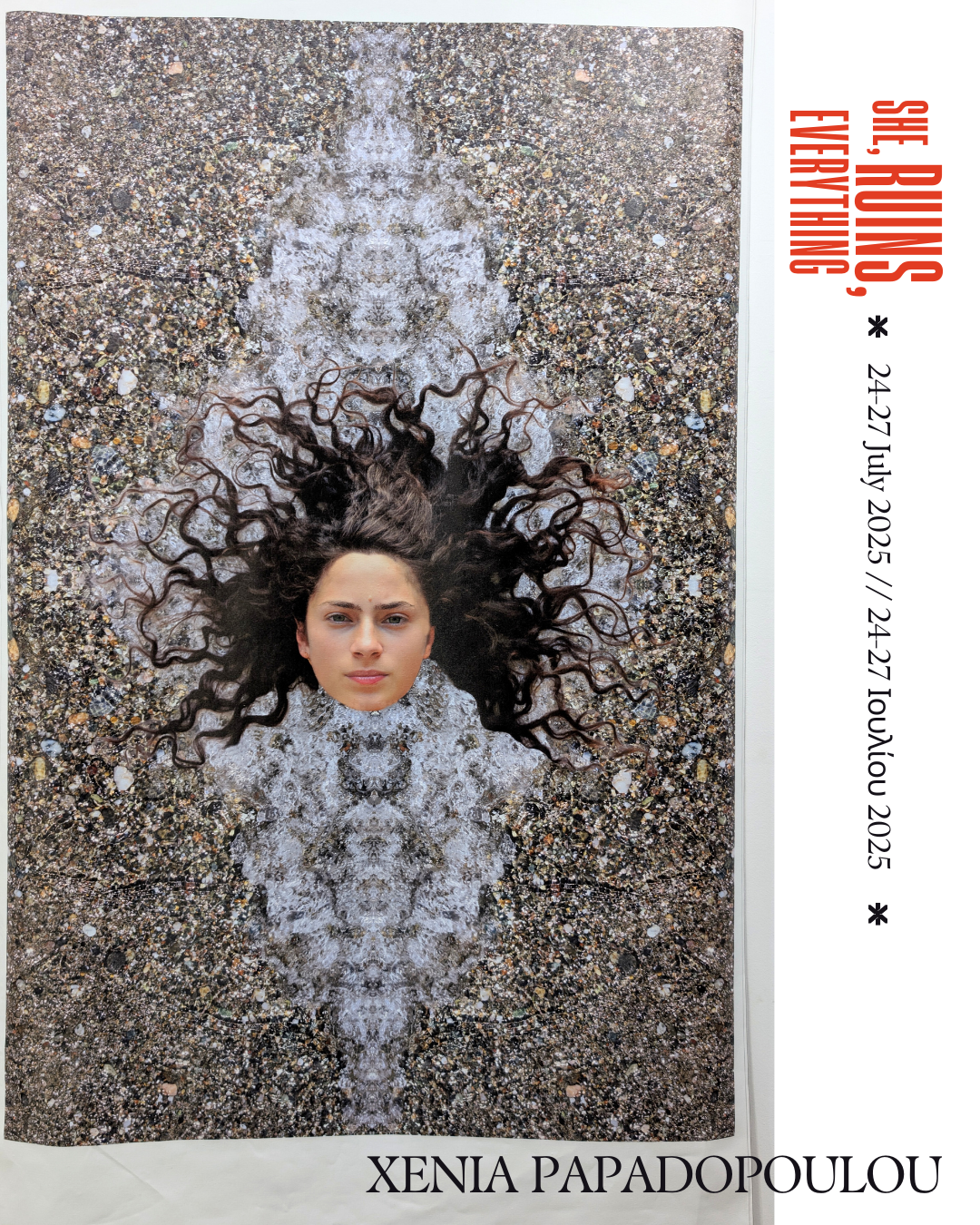
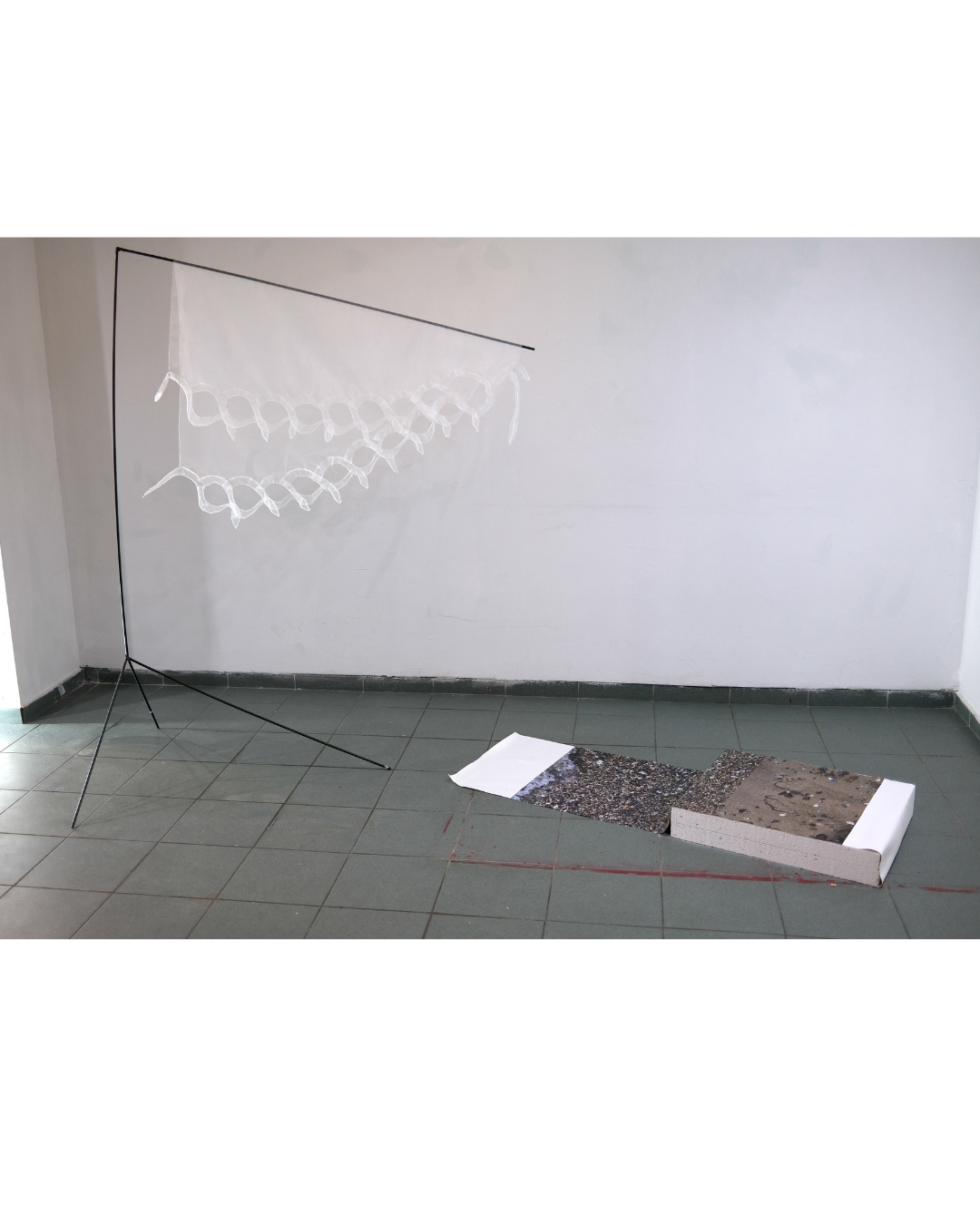
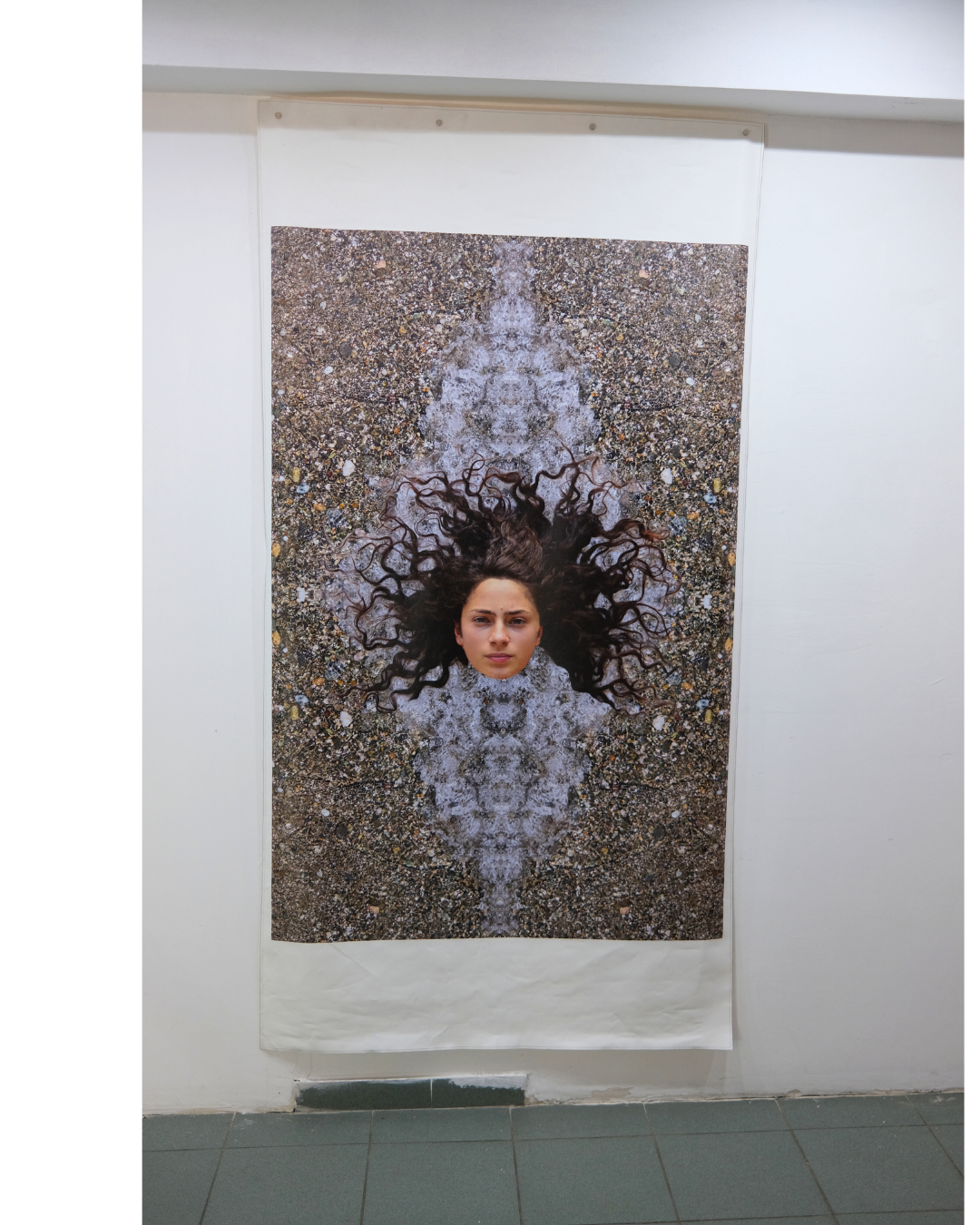
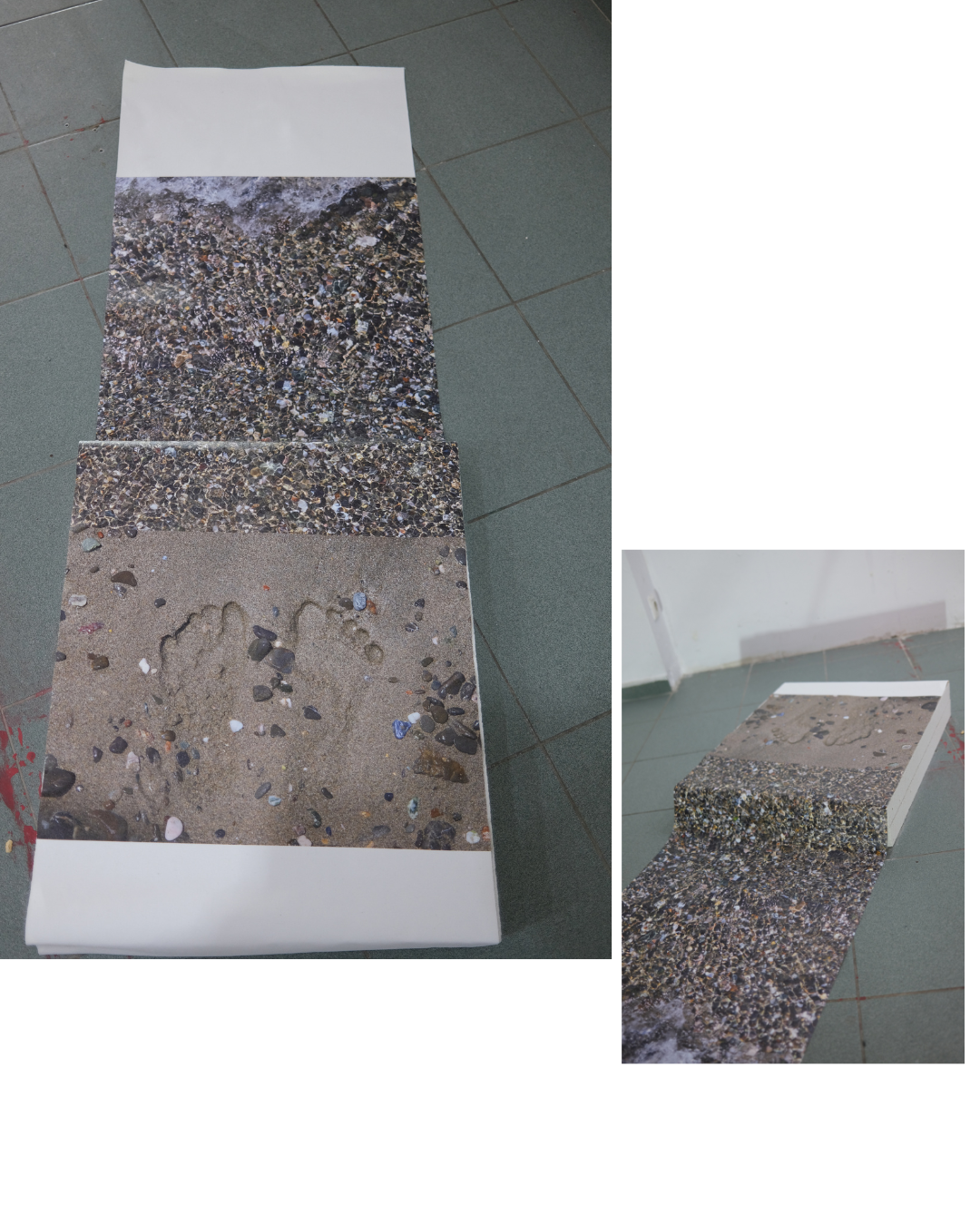
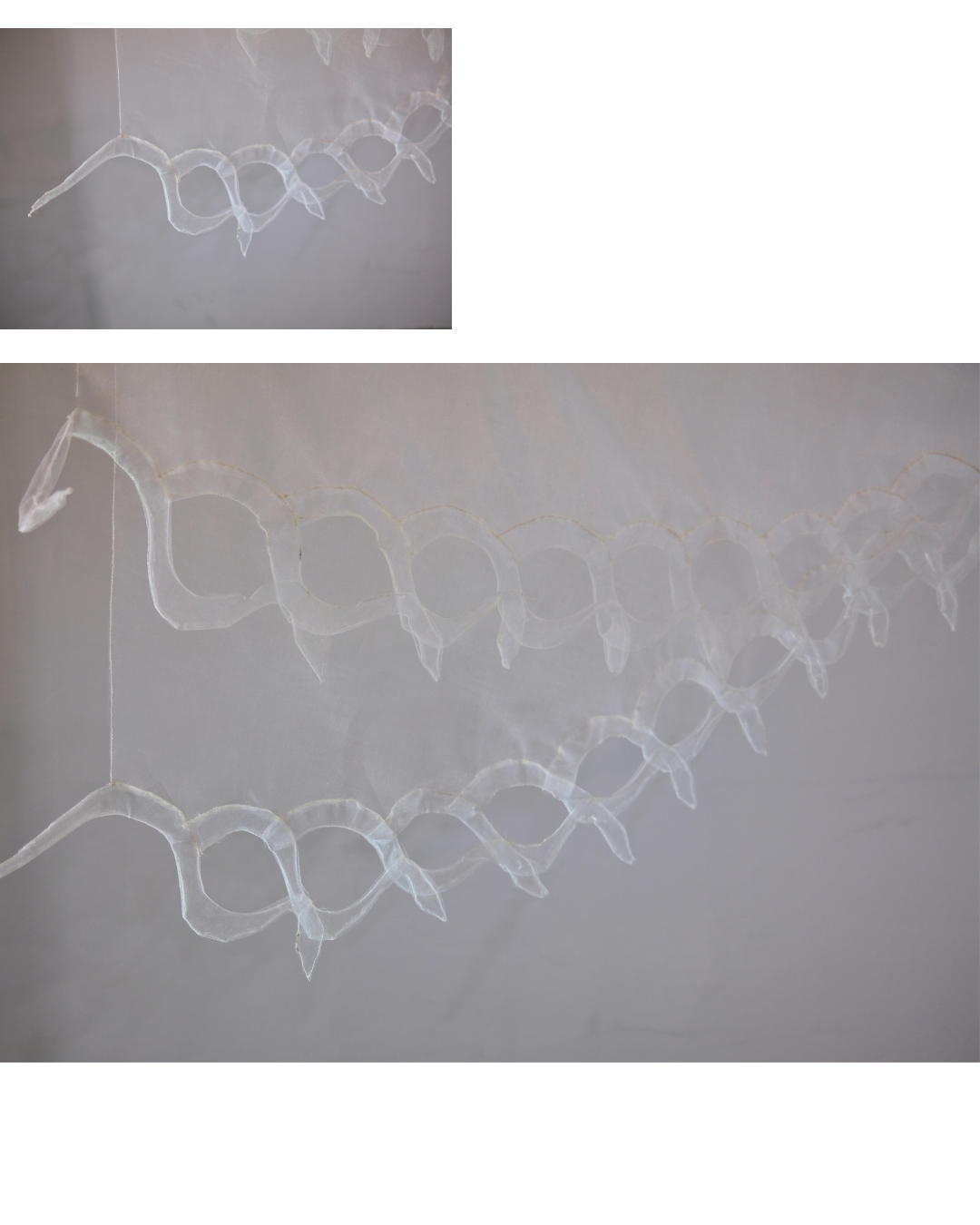
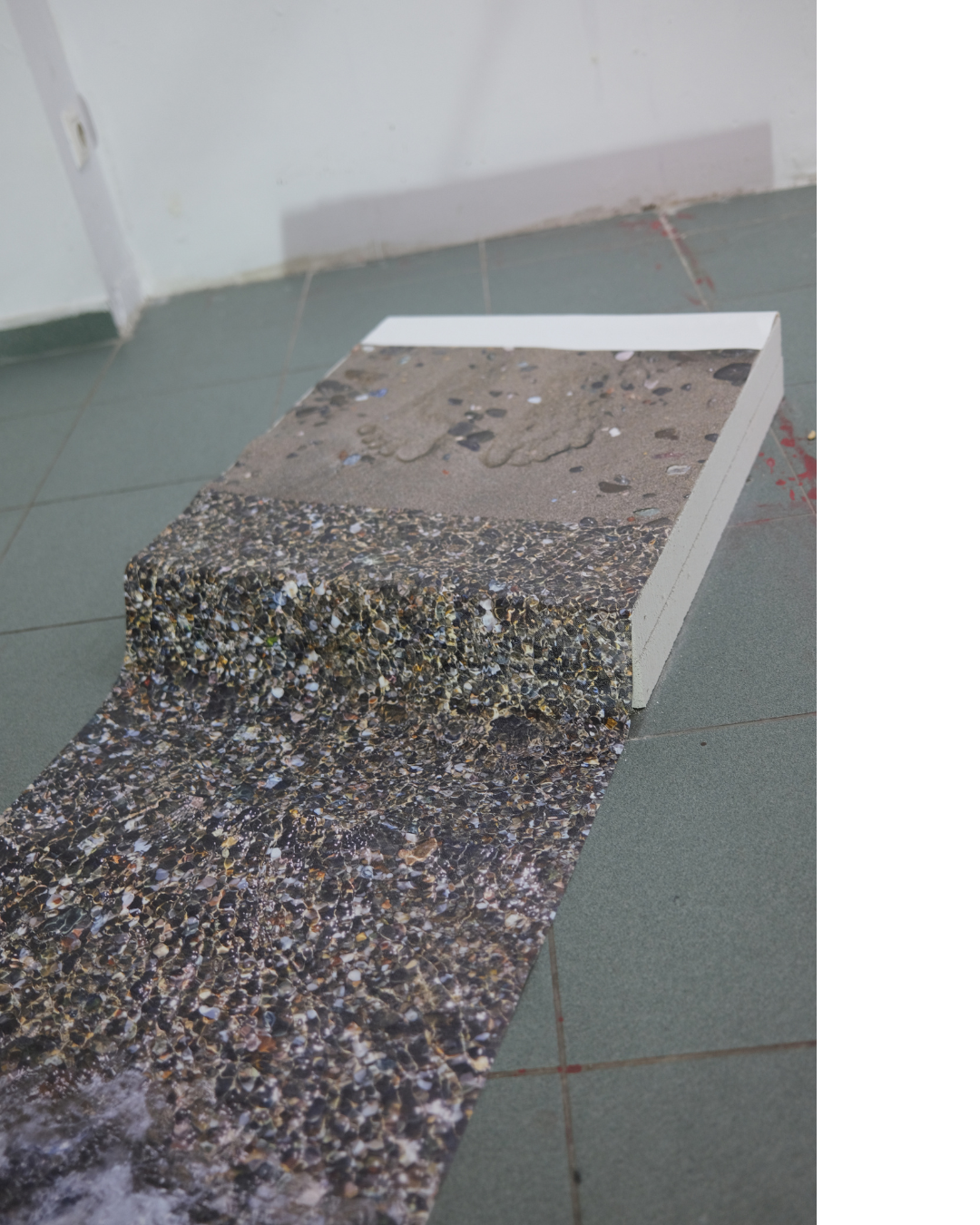
Or, and, Medusa staring out from the shield of Athina, used as an apotropaic* totem to destroy the bodies of giants and vanquish enemies? ({*Use evil to fight evil}) Inspired by an actual statue of Athina from the Akropolis museum, Xenia Papadopoulou presents this Athina as a male construction, a stripped-back form of metal, bearing a cloth cloak with gossamer Medusa snakes. A sandstone block proffers a disappearing footprint in the sand- the artist’s own.
So who is the ruin and what is ruined here? Time and the sea disappear the imprint of the artist’s body; one female deity uses another’s power to attack and harm. Woman against woman, reading against reading. By deconstructing meaning, are we too freezing the living layer of a narrative? By making art, are we freezing raw creativity and transforming it into solid stone? Medusa’s monumental face stares from the wall nearby, mesmerizing.
There is conflict here, there is tension. Ruins (shipwrecks, old stone statues, ancient myths) reveal and provoke, conceal and evoke still more questions.
Back by the window, death has its place.
Death, and everything.
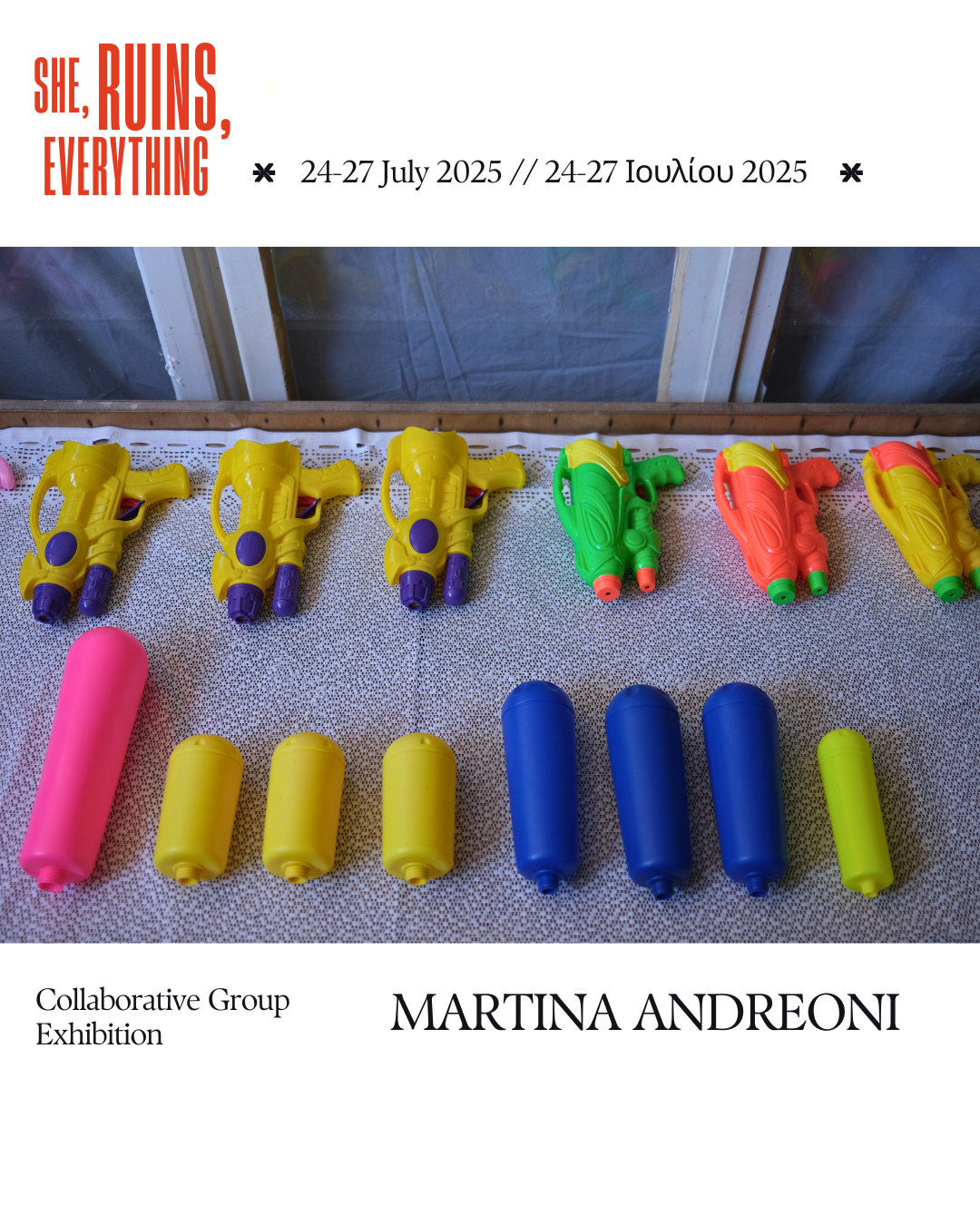
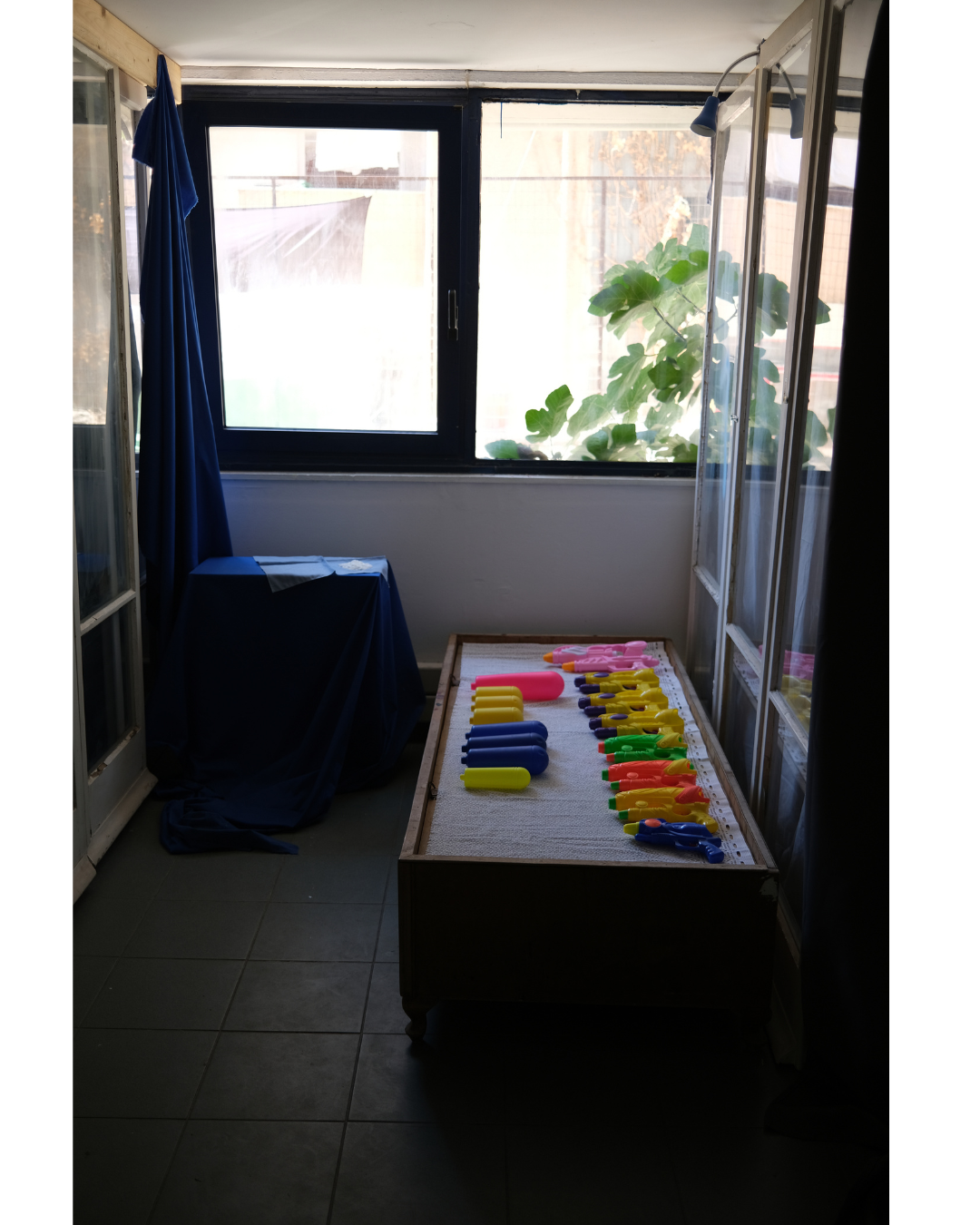
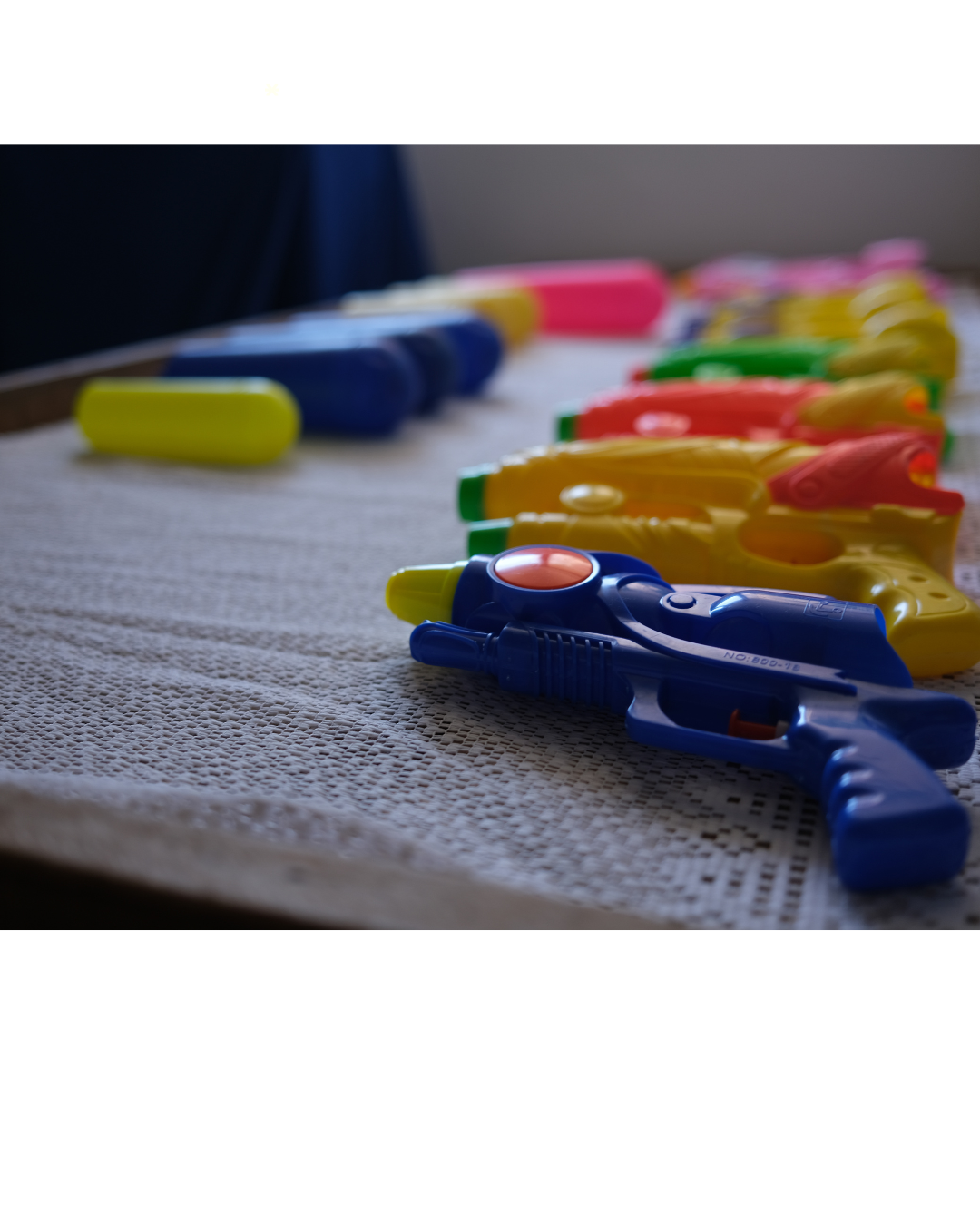
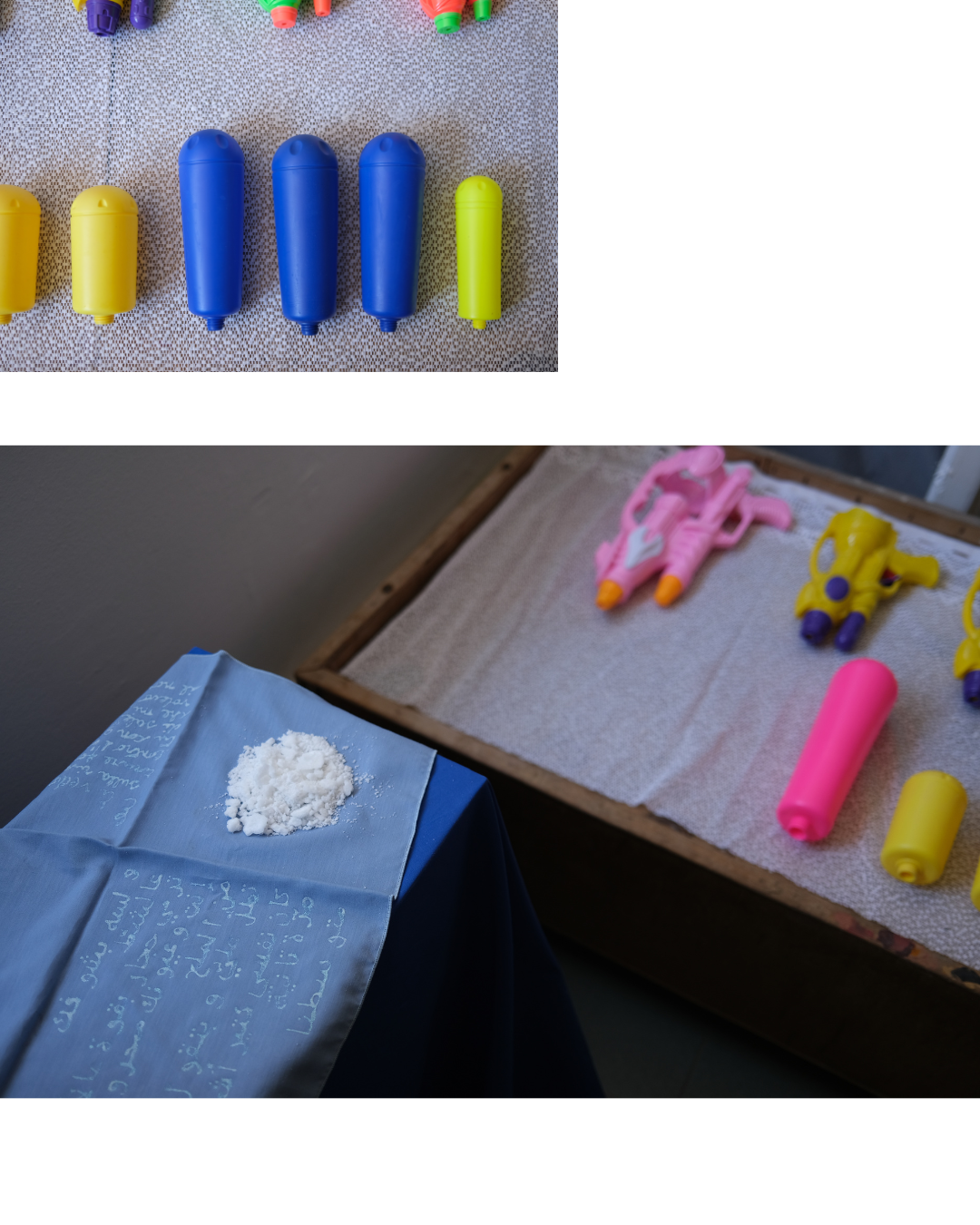
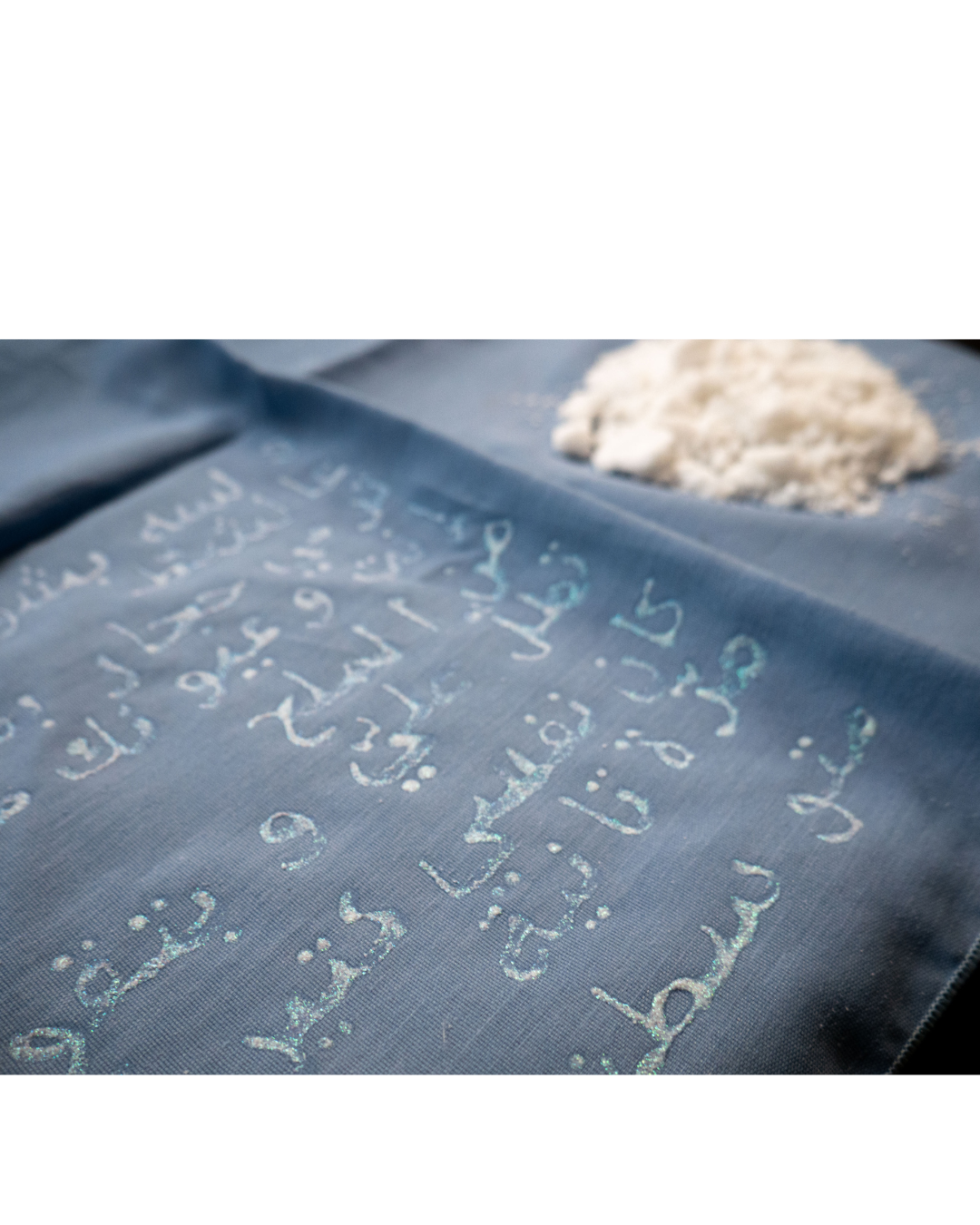
Martina Andreoni’s installation of colorful plastic guns displayed on a wooden bench, or bed, offers a delicate sadness. Surrounding the bed, a story painted on fabric in glittery paint: materials that are tender, and childlike, and playful. But do not be deceived. The guns are lined up in the way that the guns of Hamas are displayed and documented by the IDF. Like an altar to fallen martyrs but crafted by their enemies.
The story surrounding this quiet monument is a story of the Mediterranean. The artist’s friend, a young Palestinian man, went with her to the sea in Italy, and though he lived very close to the seaside in Palestine, it was the first time he had been able to reach it in ages. The ruins of ongoing violence blocked him; he could not see the sea. Death, sorrow, a moment of reflection.
When everything is in ruins…
For Kali, Hindu goddess of creation and destruction, there are no binaries. She is goddess of good/bad, of the merging of those things. She likes to drink and party and dance; she is mad, hungry, and angry.
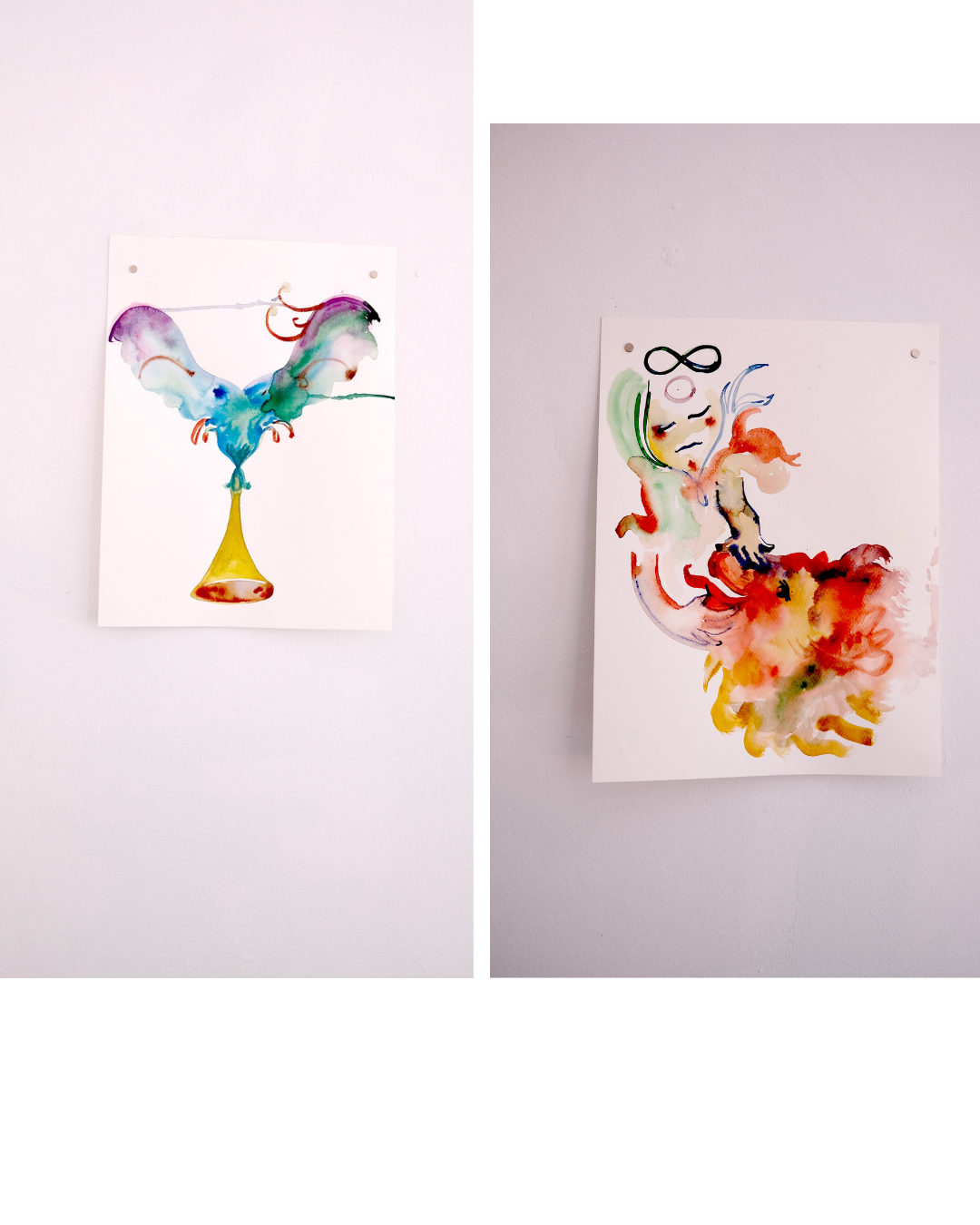
Nim Jundoosing returns to her roots, roots she had long rejected, to explore the seven facets of Kali. Through a series of drawings, paintings, and small sculptural installations, a tender new relationship with this fierce goddess begins to emerge.
A new way of engaging with the goddess who provides protection, sparks transformation, and embodies “Everything”: If one destroys one’s ego, perhaps one can receive, not violence, but love. The works invite you in…
In the front gallery: life, a feast, “Everything”.
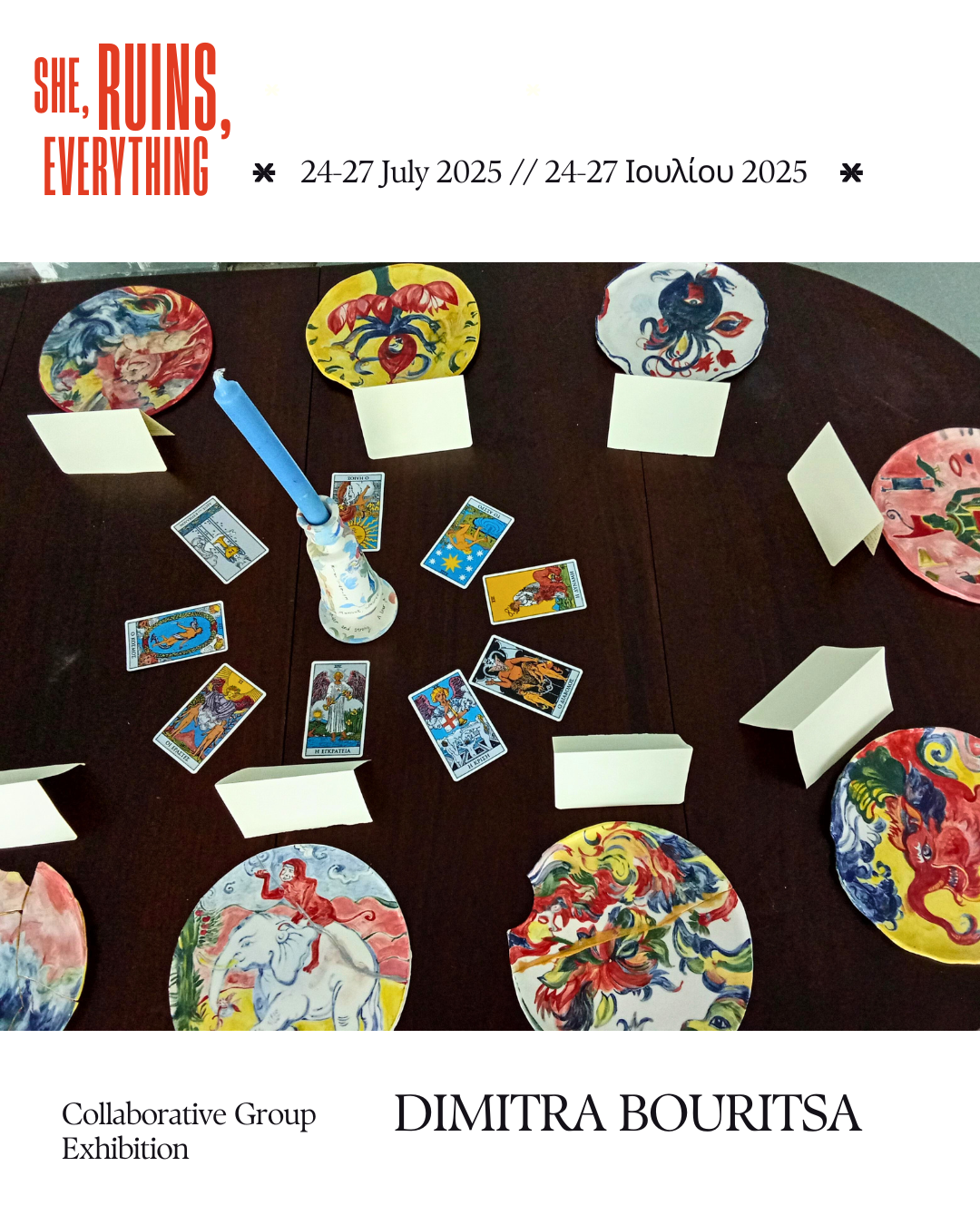
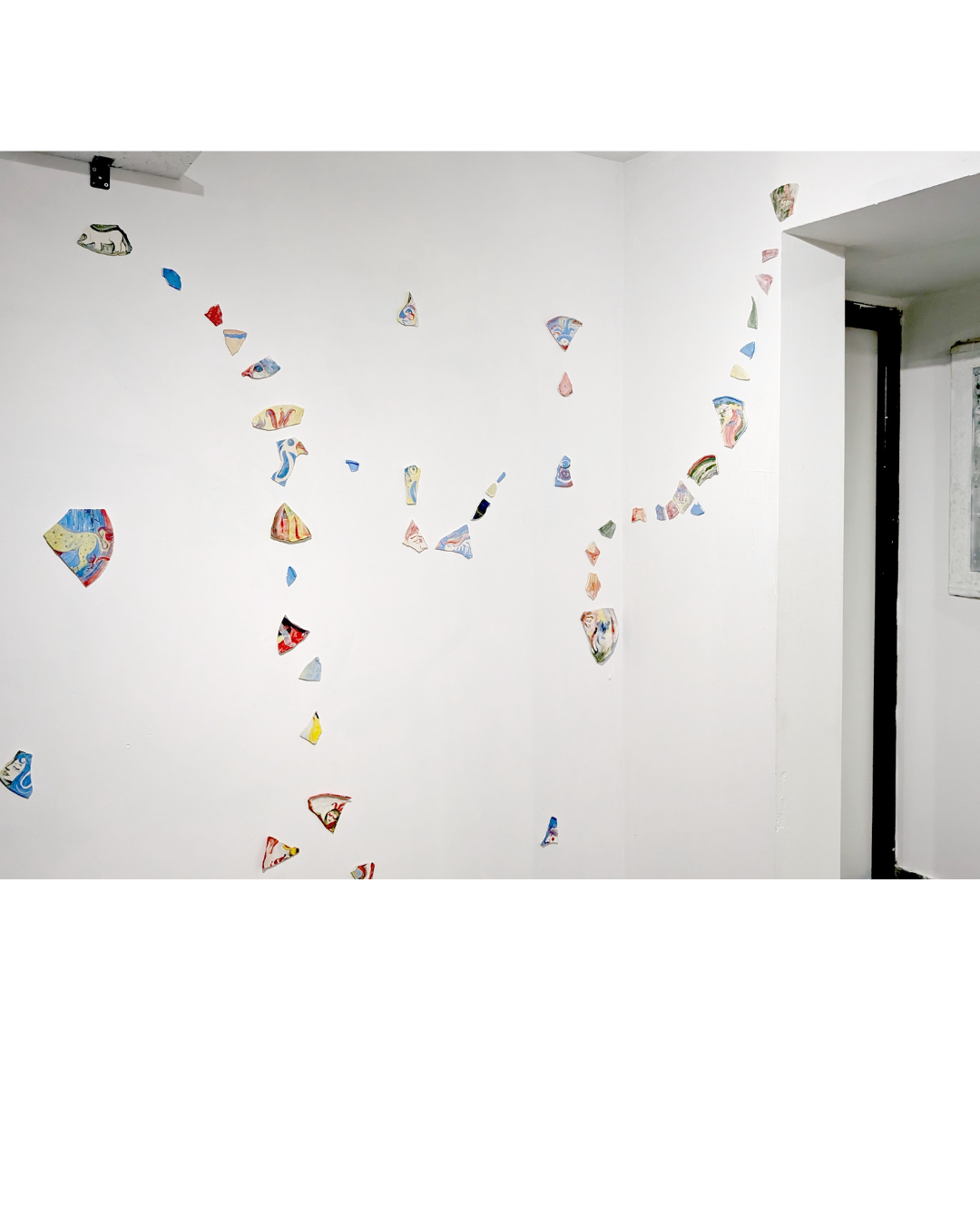
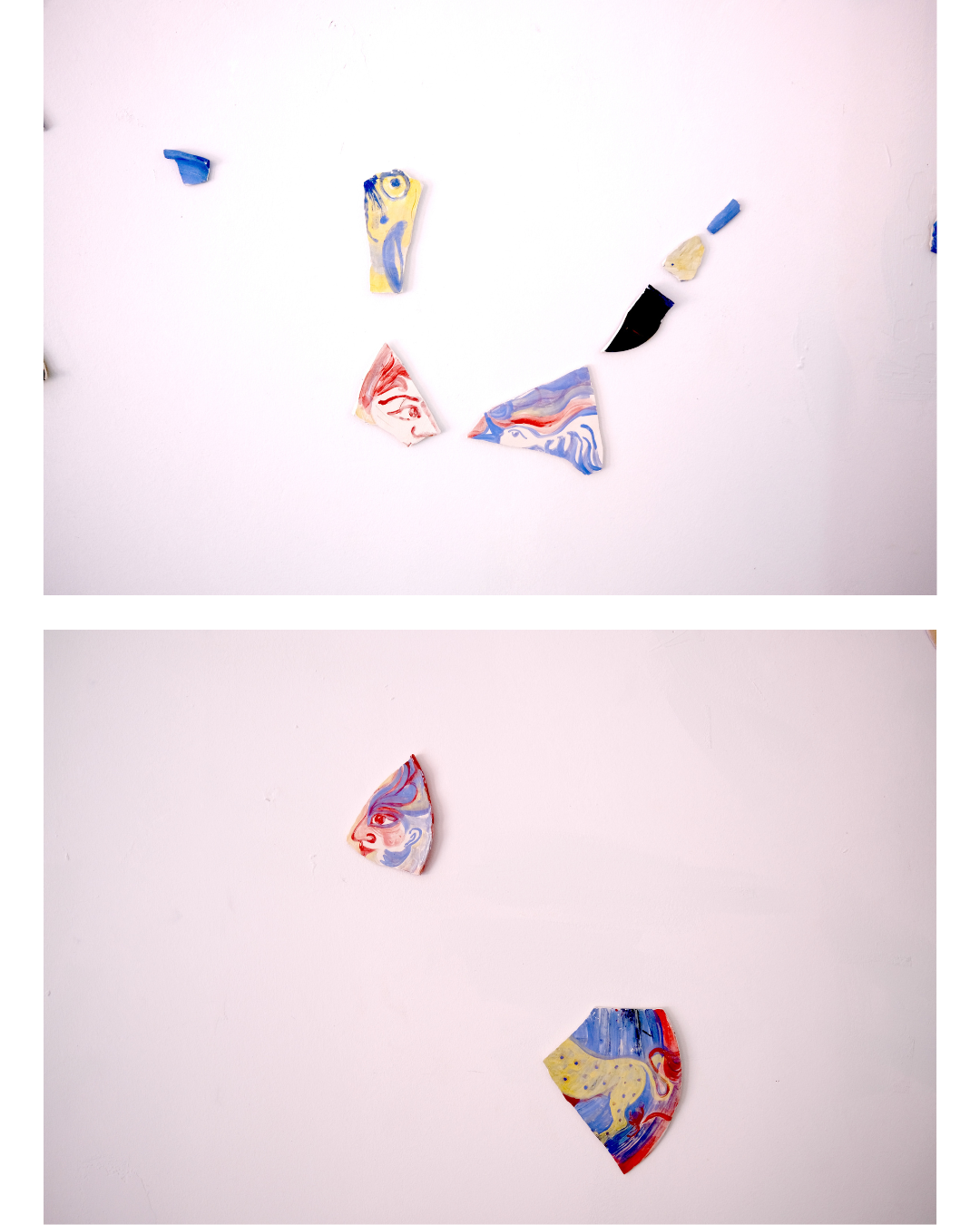
A table laden with objects invites communal activity. You enter, you take your place at the table. You are offered a meal, or food, at any rate, at a table set with colorful painted plates, and broken plates (the ruins of).
{By your plate: a card lies. No menu or guest card have you received, but texts from writers and poets, female-identifying and non-binary. So, guest, reflect! On identity, and hierarchy, on schemes and power systems. And maybe if you’re lucky, you can take these words home, pocket-sized homages to free thought and expression. }
Small ruins made of clay made by Nim Jundoosing look like they have been surfaced from under the sea. (...That watery subconscious of the feminine again…). Perhaps, like the fishermen of Mauritius, you can use a clay pot {ruin} to ensnare a tiny octopus, Medusa of the sea.
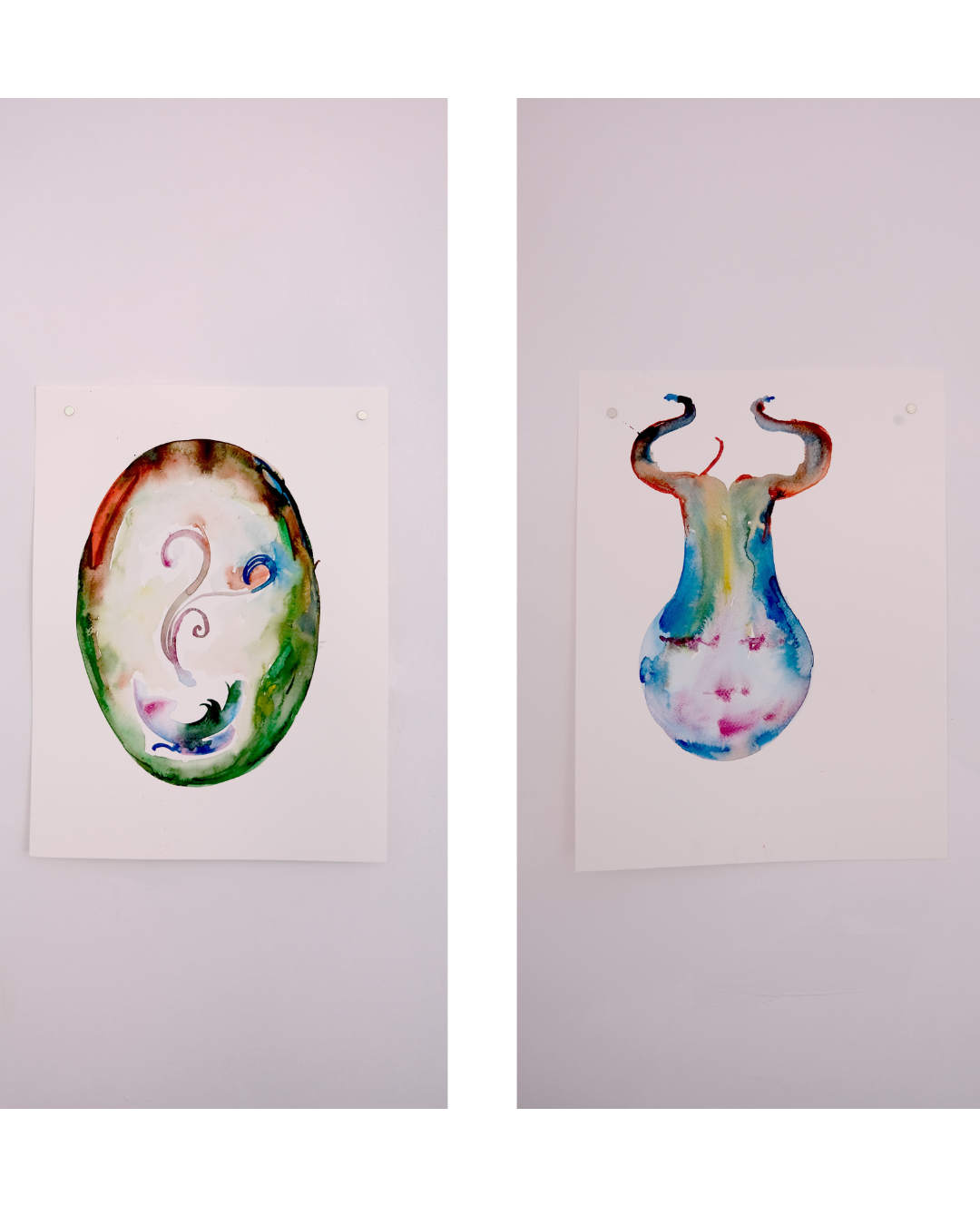
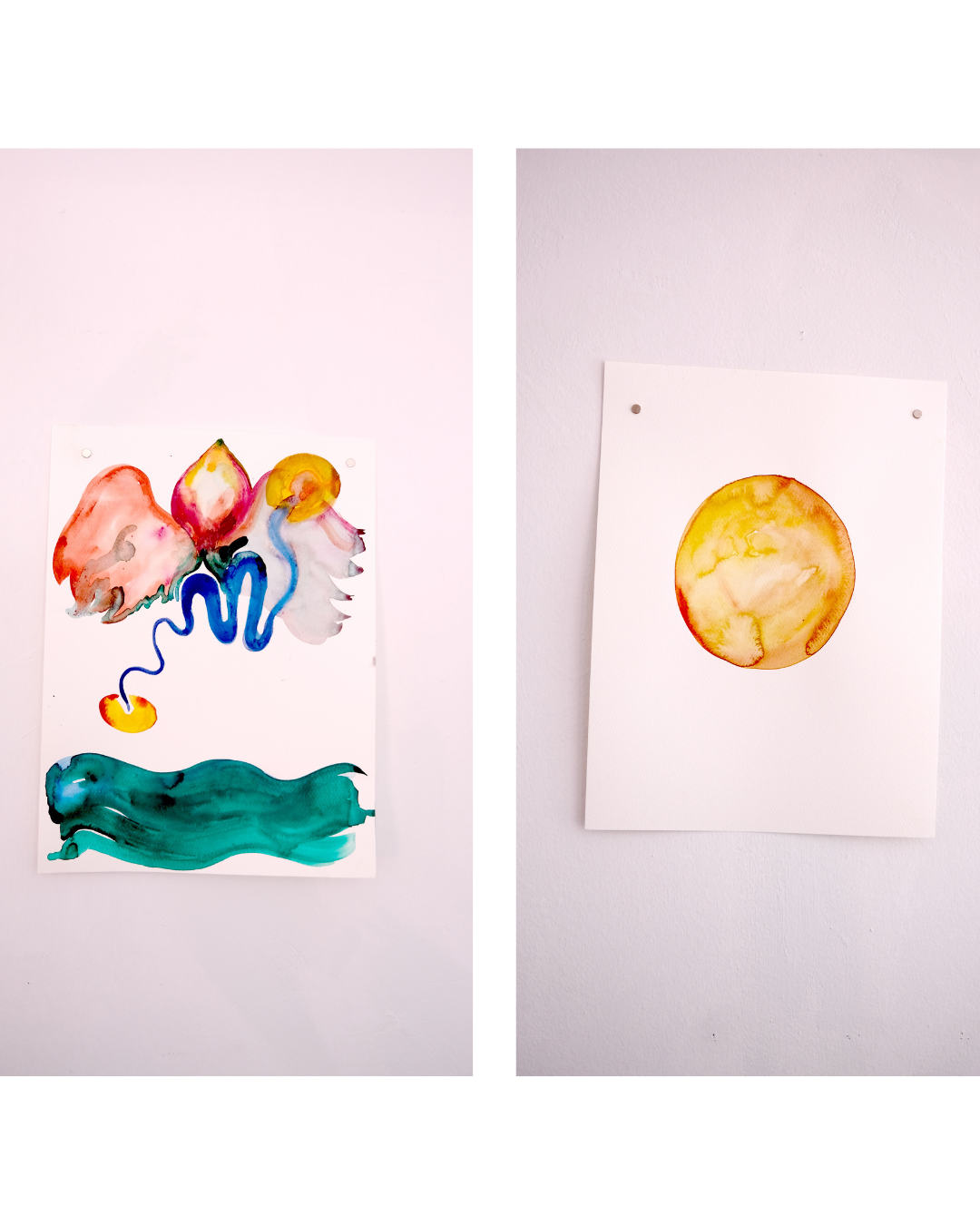
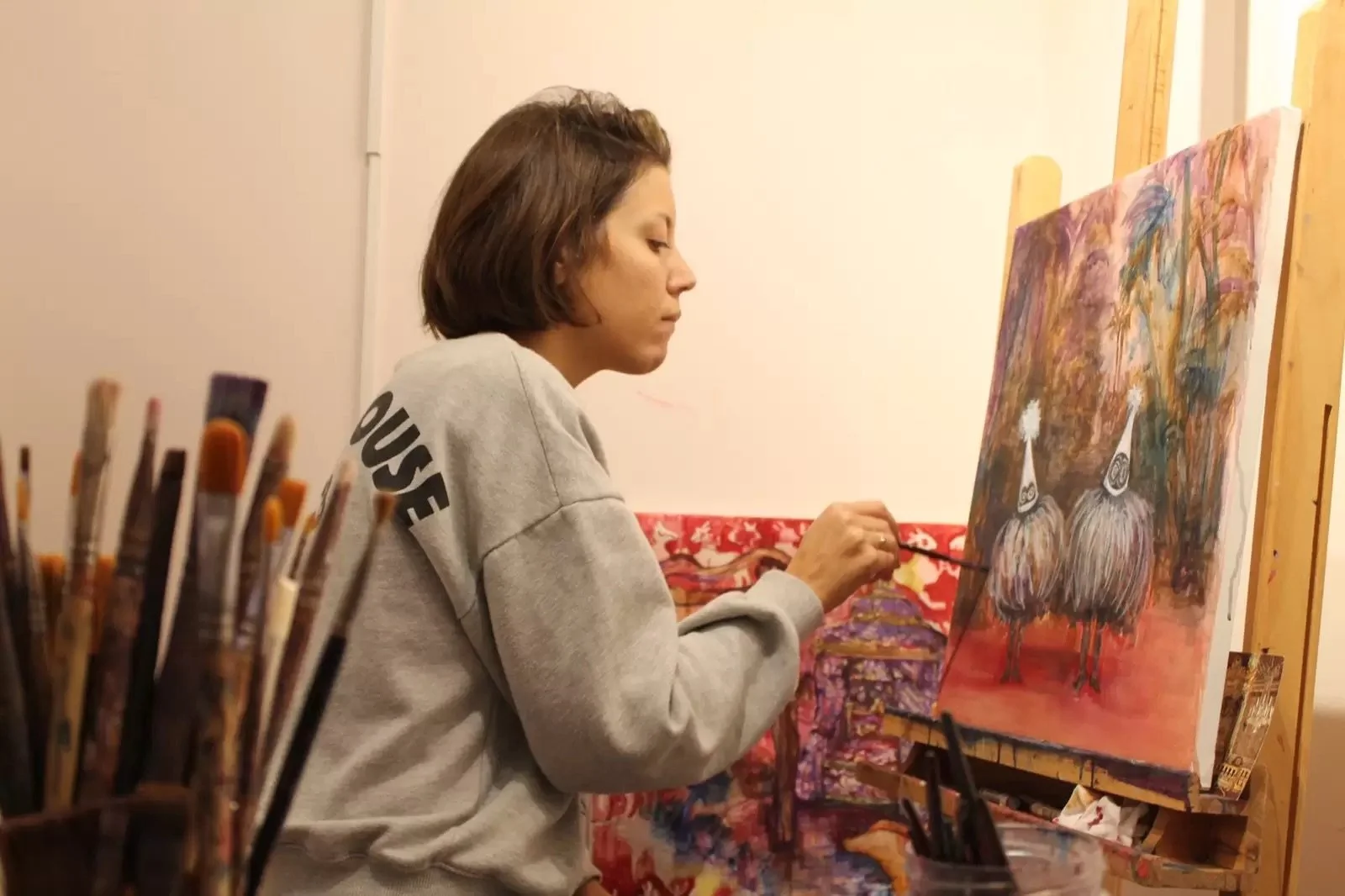
You are surrounded by Dimitra Bouritsa’s reinterpretations of tarot cards. Sun, devil (with suspiciously snake-like horns), temperance, strength. An egg- like orb alone on the wall is the cosmos: truly “Everything”. But who sits at this table laden with symbols of myth and mythmaking? A coven of witches, in strange surreal hats? A small feminist convention? A conspiracy of healers! The tarot spread reflects your inner wisdom, and women pulsate with secret knowledge, circulating.
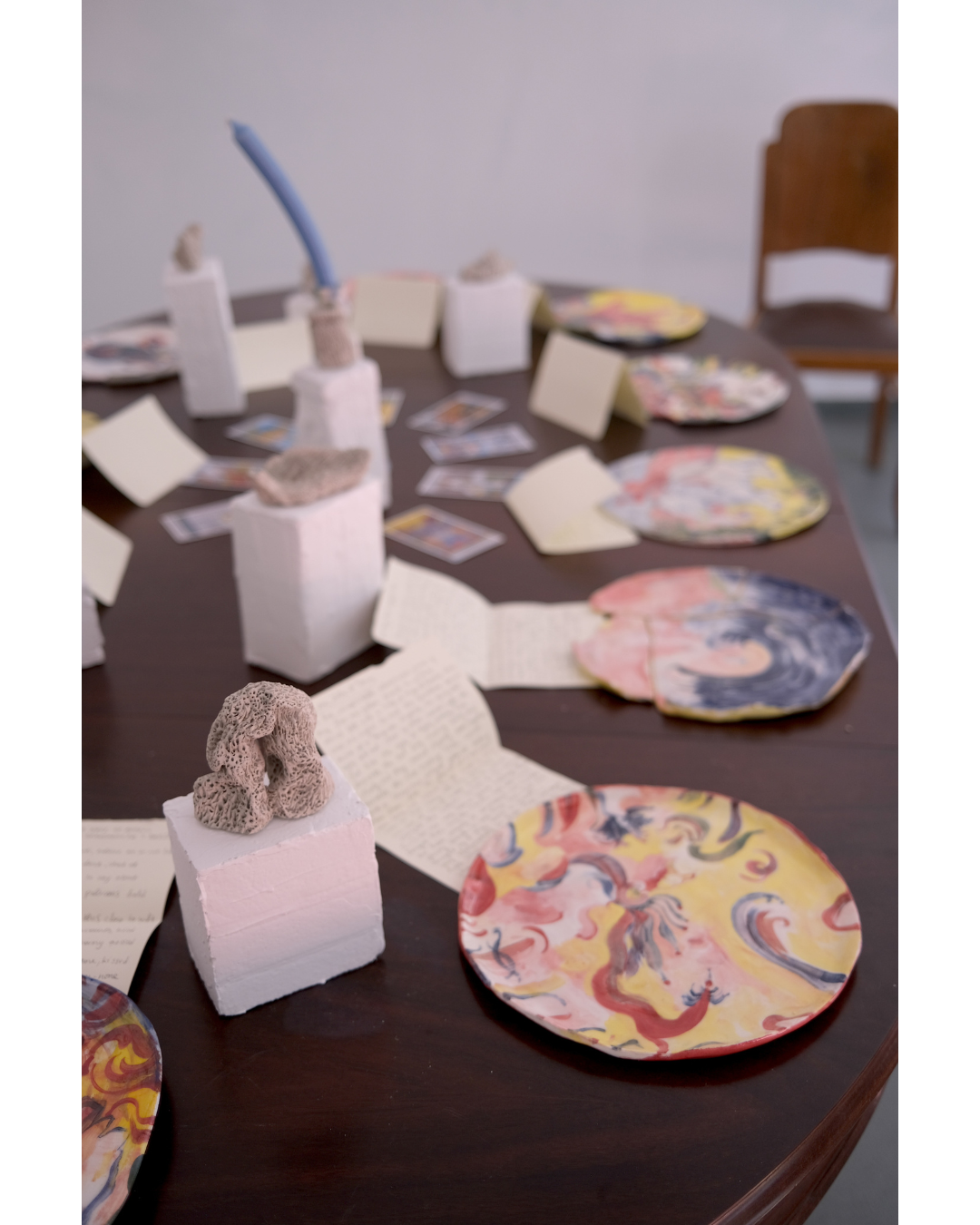
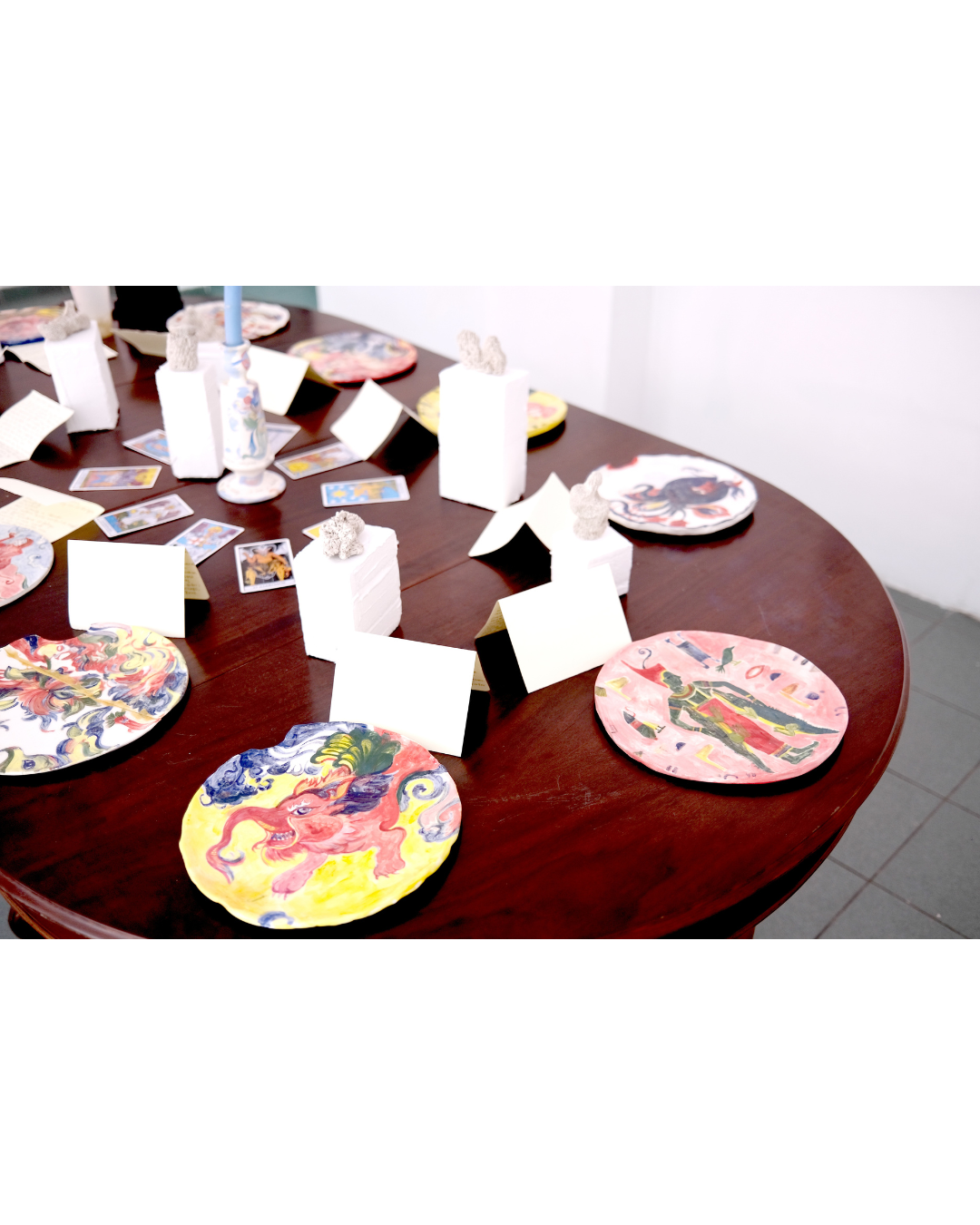
Anyway, we’ve offered you food. Are you sure you are going to eat it? What if she has ruined it? Martina Andreoni has a dropper bottle full of something. What if it’s poison? Do you dare allow space for the leftover scraps of “Everything”? (When a mother cooks for her children, and they do not eat it, what is lost? What is gained? The ruins of an artist’s life, the ruins of a dinner plate.)
We are seen as nagging bitches, not as workers in struggle…when we say that we produce capital, we say that we can and want to destroy it, rather than engage in a losing battle to move from one form and degree of exploitation to another.
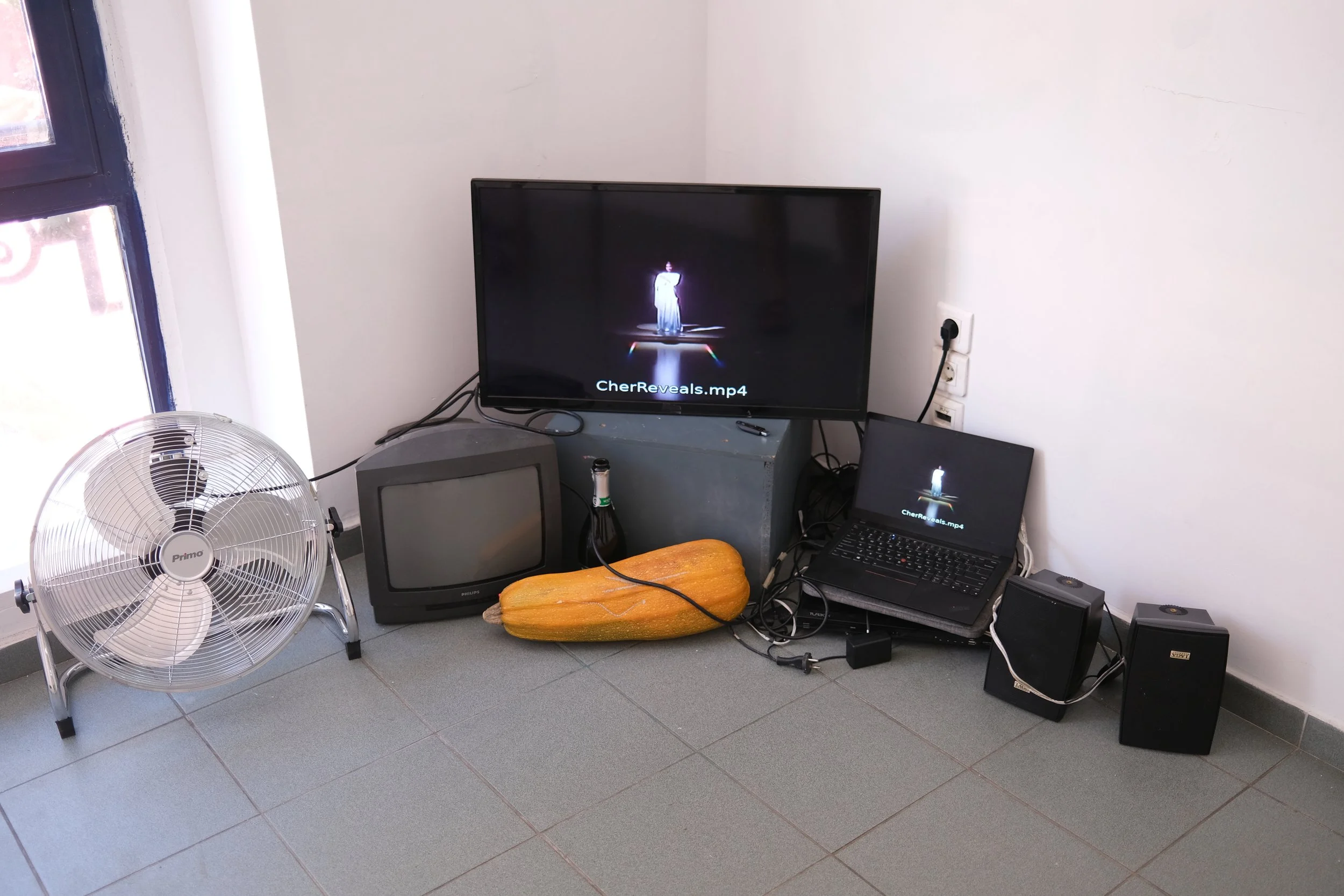
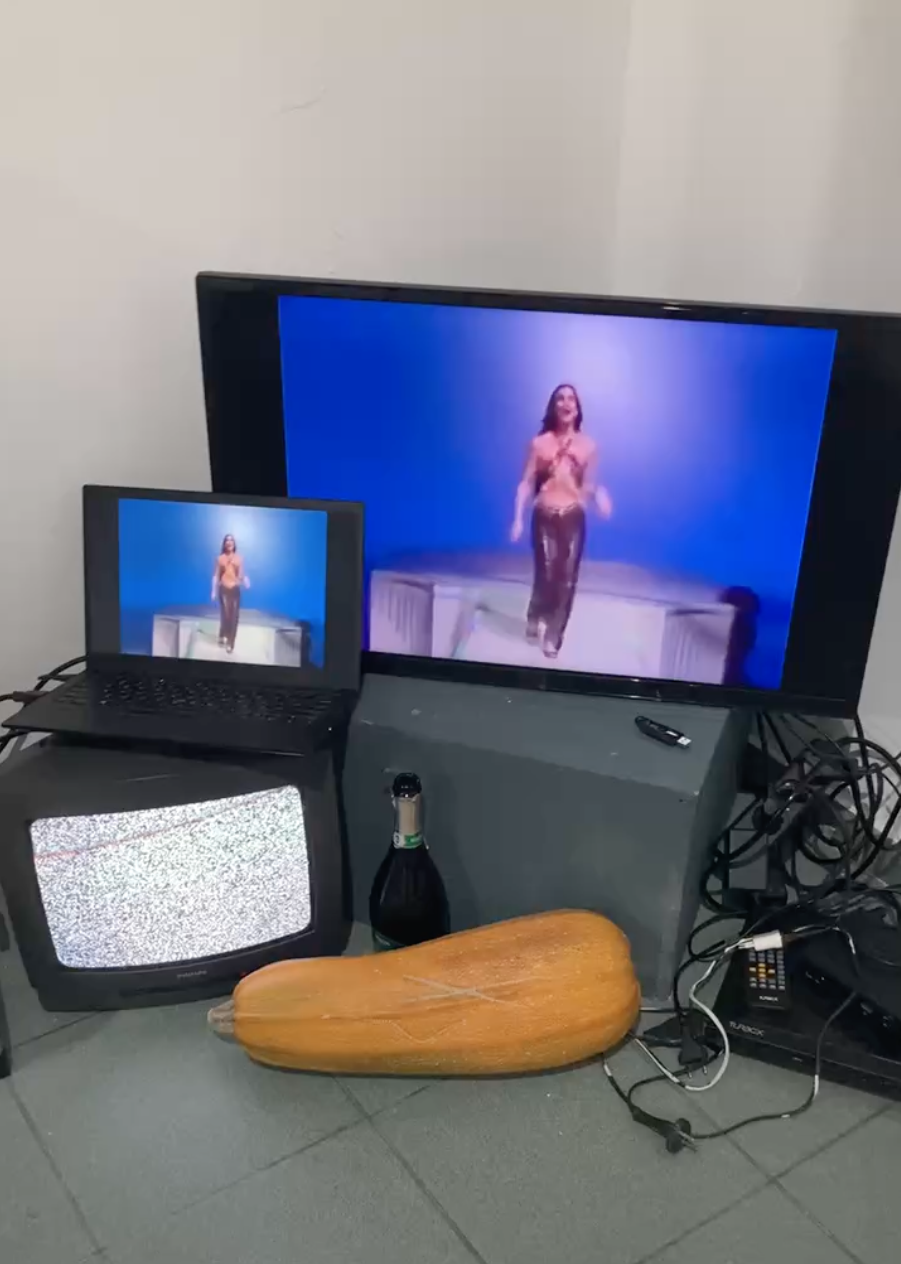
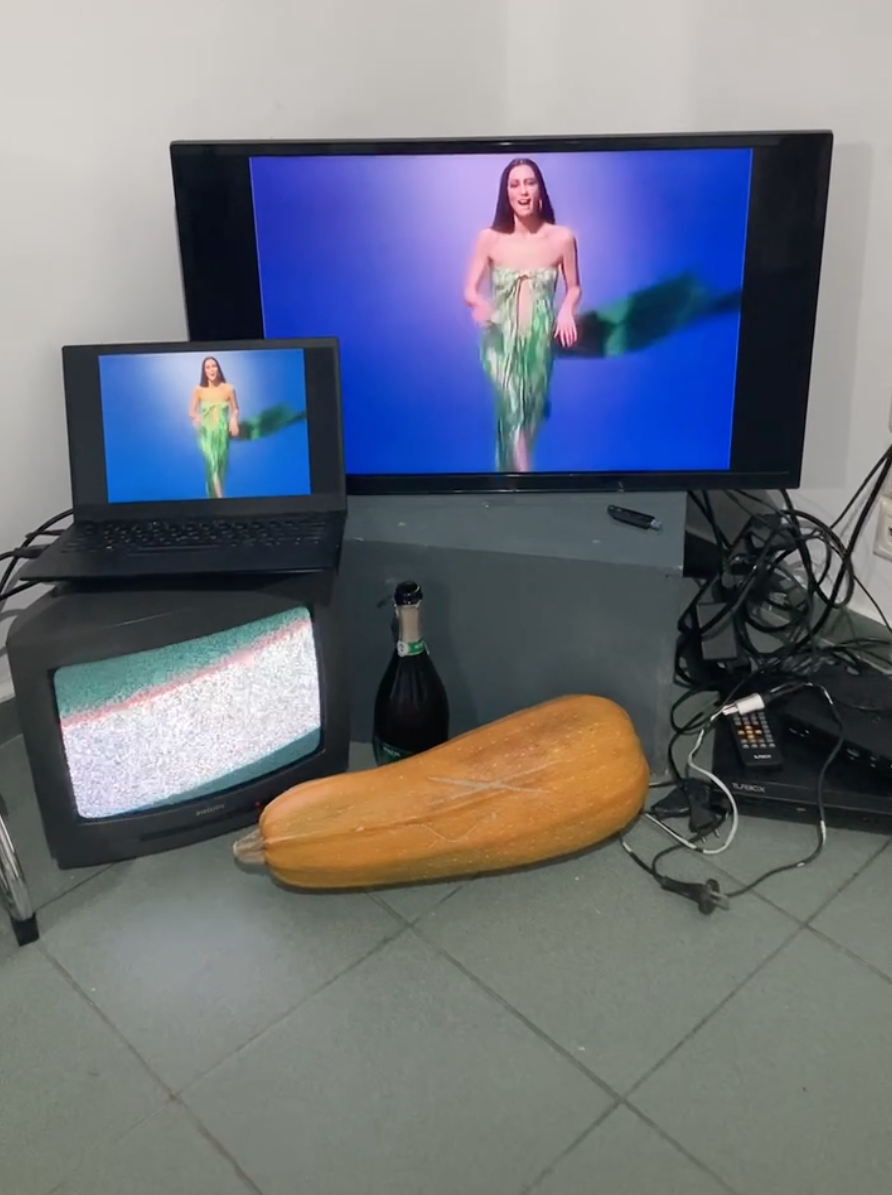
In the corner, Cher is taking off her robe. Like a snake shedding its skin, she is taking off her robe and clapping and running towards the camera, again and again and again.
The ruins of Cher’s robe sit crumpled in a pile, but no one is watching the person who goes to retrieve them. Is she destroying something, by taking off her robe? Is she breaking through into something else? She sheds her snake skin and whips her hair, and emerges triumphant, ready to entertain.
The next moment, she does it again. Discards and reveals. Discards and reveals. When is a ruin like a breakthrough? What is the secret to the riddle of Cher? Why is she so damn fabulous! What does it mean that she too has aged? (And why on earth did she play Meryl Streep’s mother in the sequel to Mamma Mia when they are just about the same age?) Time is making a ruin of all of us! So the glamour mags say. But what if we make ruins of them? What if we sit back, alone and satisfied, and eat our cake?
So,
She as witch, as healer, as violent destroyer of the patriarchy, as voice, as gaze, as mother, as spinster, as young beautiful woman turned into a monster, as tentacled rough laughter, as monstrous.
Ruins as wounds, as remnants of meals, as fragments of buildings, as broken down narratives, as something spoiled, as let down experience, as unfurled hair, as hair on a plate, as glass transformed underwater by salty tears.
Everything as mystery, as power and ferocity. Serving everything. Everything as babe, as cunt, as portal to the connection with the inner self and the divine. Do you believe in life after love? As glory hole, and everything the hole reveals.
-Sara Rosenthal, curator
co-Director of the Argo Annex and Argo Studios Residency
Featured Artists

Martina Andreoni
Nim Jundoosing
Dimitra Bouritsa
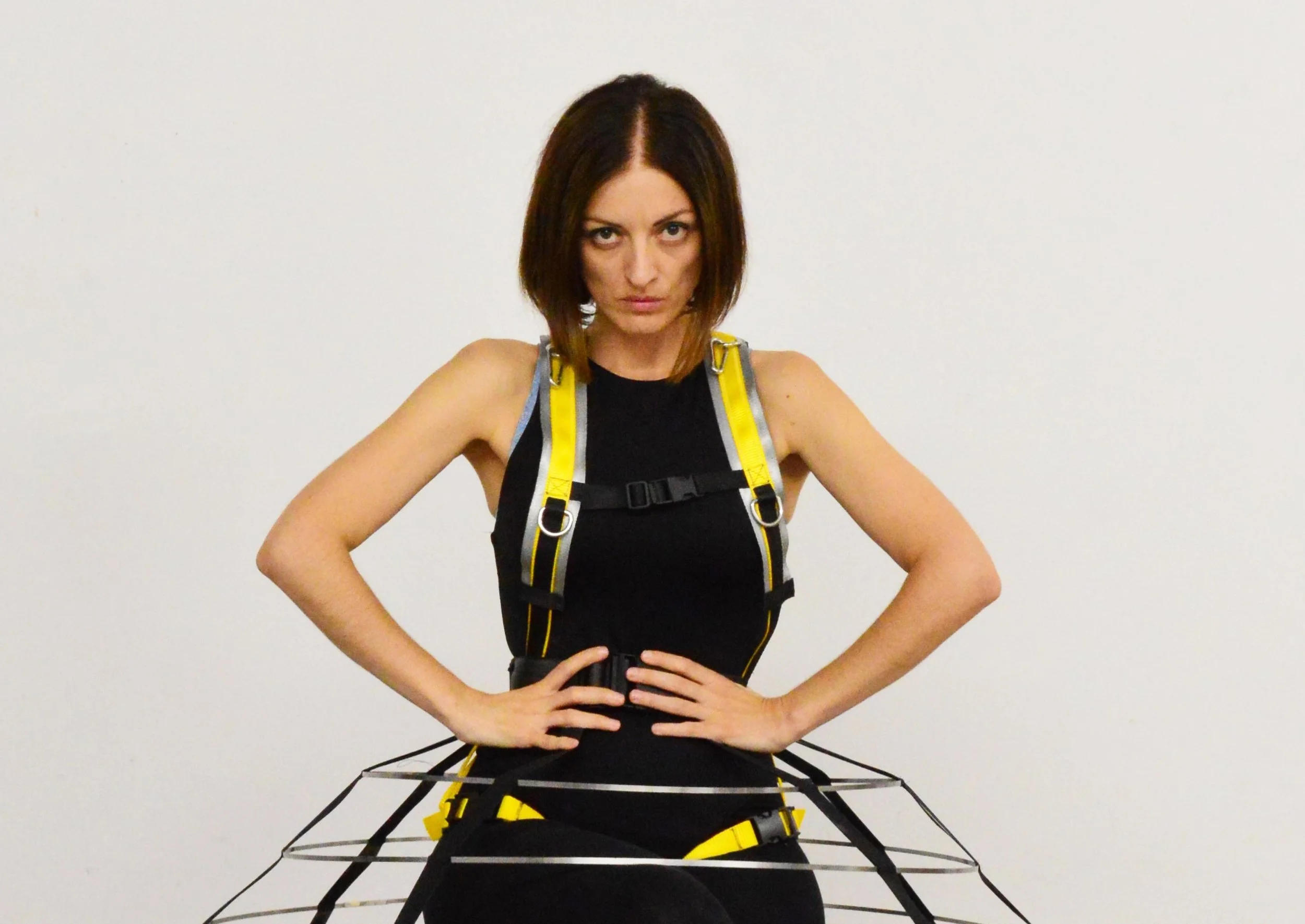
Xenia Papadopoulo